After Dermatologic Hand Surgery, a Glove Worth Borrowing From Orthopedics
Updated
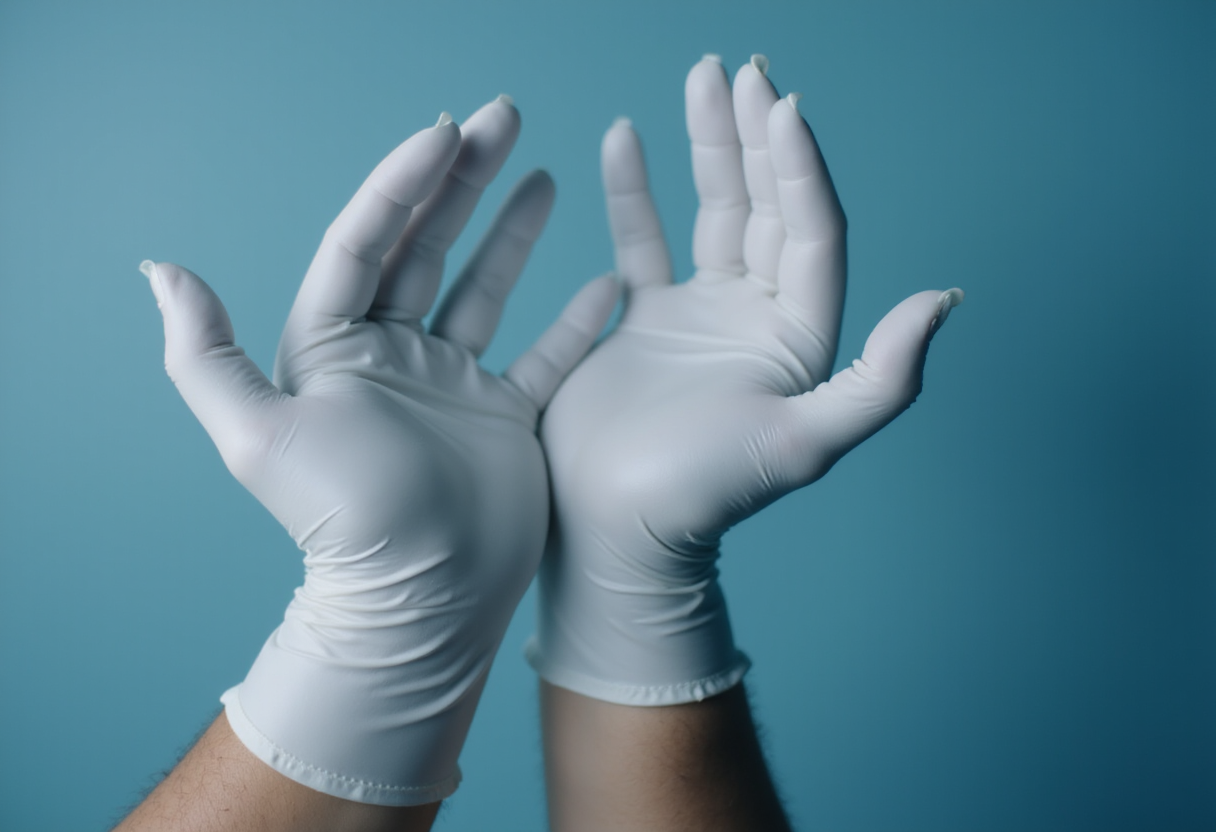
A 2018 randomized trial found compression gloves cut edema, pain, and stiffness after distal radius fracture repair. A new JAAD short communication wants dermatologists to adopt the same approach after their own hand procedures.
Picture the closing minutes of a Mohs procedure on the back of a hand. The defect is closed. The dressing goes on. Then comes the part most surgeons overlook: what happens tomorrow, when swelling turns a clean flap into a tight, hot one.
Vixey Silva, DO, and colleagues made that the heart of their October 2026 short communication in the Journal of the American Academy of Dermatology (Volume 95, Issue 4, pages e341–e342).
Why does hand edema threaten dermatologic surgery?
The hand is unforgiving. Its compartments are tight. Its neurovascular bundles sit close to the skin, and even modest swelling carries real clinical risk across four categories the authors flag:
- Tension on closures
- Threatened flap and graft viability
- Higher infection risk
- Stiffness that limits daily function
Conventional management each has limits. Icing cools the surface only. Elevation depends on patient compliance for days. Improvised compression is rarely consistent.
The hand's confined compartments and nearby neurovascular structures make even mild swelling clinically significant.
What did the orthopedic trials show?
The recommendation rests on one anchor study. Miller-Shahabar and colleagues randomized distal radius fracture patients and tracked swelling, pain, and function in a 2018 trial published in the American Journal of Physical Medicine & Rehabilitation.
The glove group improved on all three measures. An earlier study by Mann and colleagues in burn care, published in 1997 in the Journal of Burn Care & Rehabilitation, showed how custom-fitted pressure garments deliver consistent force across the hand.
The short communication borrows that orthopedic evidence. Compression gloves are routine after hand fracture repair. They remain underreported in cutaneous surgery, even though the edema mechanism is identical in dermatology.
The evidence exists. The dermatology trial has not.
How do the gloves actually work?
Three mechanisms, in plain words:
- The fabric limits fluid pooling in loose tissue.
- Gentle pressure supports lymphatic vessels, the body's drainage system.
- The glove keeps the hand mobile. Patients bend and straighten their fingers without thinking about it.
That last point matters most. A stiff hand can stop a person from writing, cooking, or driving within a single week of recovery, and motion lost early is hard to win back later through therapy alone.
The glove treats edema and protects function at the same time.
What should patients bring to the visit?
The short communication's instructions are simple. Patients bring a properly fitted compression glove to the surgical appointment. The surgeon places it after the dressing goes on.
That single step moves edema control from a hopeful handout to a structured part of recovery. The published piece cuts off mid-sentence in the available preview, so exact wear time and pressure settings are not in the abstract, but the directional message stands.
If the patient owns the glove, the surgeon controls when it goes on.
Where does this leave dermatologic surgeons?
Senior author Stanislav N. Tolkachjov, MD, frames the glove as a low-risk, high-recovery add-on. No new device. No reimbursement hurdle. Just a borrowed tool from the orthopedic playbook.
Tolkachjov disclosed speaker and investigator roles with CASTLE Biosciences, Regeneron, Boehringer Ingelheim, Kerecis, and Bioventus/LifeNet. None of those ties relate to this work. The other authors declared no conflicts of interest.
The next test is straightforward. A dermatologic surgery cohort wearing gloves after flap or graft closures on the hand, tracked against usual care, would settle the question inside a single season of recruitment.
If the orthopedic signal holds, expect the technique to move beyond JAAD's short communication pages into routine postoperative instruction in coming years.
Original: ars.els-cdn.com
Daniel Okafor
Show full bio
Staff writer covering people, launches and day-to-day practice in Clinical dermatology, inflammatory skin disease and biologics at Derm Field.