Are We Missing Hidradenitis Suppurativa in Men?
Updated
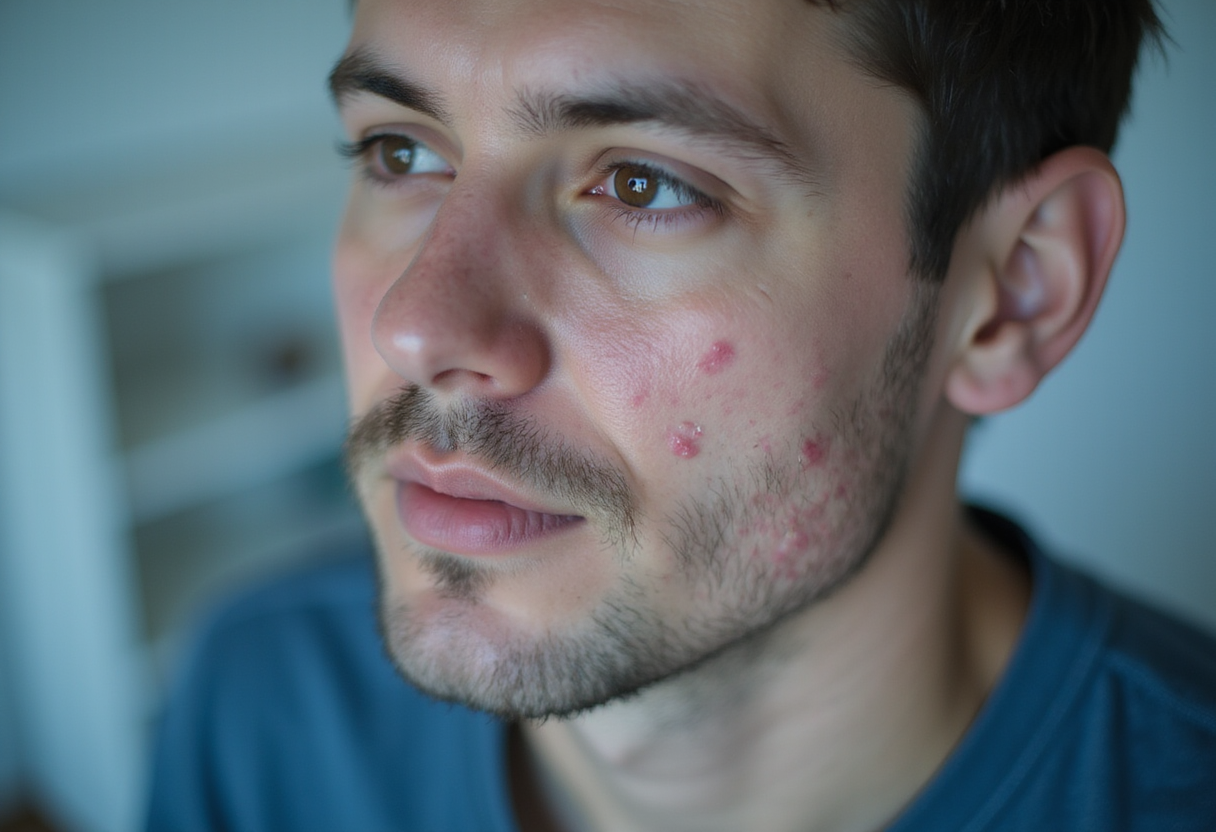
Hidradenitis suppurativa (HS) may be going undiagnosed in male patients — that's the question now being raised by clinicians writing for HCPLive, and it's one that dermatology practices can't afford to shrug off.
The piece poses a direct challenge to a familiar pattern in the HS literature: the condition is often framed as predominantly affecting women, and that framing may be shaping who gets screened, referred and diagnosed. If prevalence assumptions lean female, men presenting with recurrent boils, abscesses or scarring in intertriginous areas may get labeled with folliculitis or "recurrent infections" instead — and never reach a dermatologist at all.
That's the practical stakes of the question. HS is diagnosed clinically, on history and morphology — inflammatory nodules, abscesses, sinus tracts, double-ended comedones in axillary, inguinal, gluteal or inframammary sites. There is no confirmatory lab test. Which means diagnosis depends entirely on someone in the room recognizing the pattern, and asking the patient how long it has been recurring.
What does this change for male patients?
The core of the underdiagnosis argument is visibility. When a disease is profiled primarily in one demographic, the clinical reflex weakens for everyone else. Men who present to primary care, urgent care or emergency departments with what are actually Hurley stage I or II lesions may be managed episodically — incision and drainage, antibiotics, no referral — rather than entering a pathway toward definitive HS management.
Each unrecognized case carries consequences that compound:
- Delayed entry into care while disease progresses toward scarring and sinus tracts
- Repeated acute interventions without treatment of the underlying inflammatory process
- Lost time before introduction of appropriate long-term therapy
- Continued diagnostic mislabeling in the medical record
The HCPLive discussion doesn't claim men are being missed at a specific rate — no prevalence gap figure is offered — but the question itself is the signal. It asks clinicians to check their own screening behavior, not just the literature.
Why the diagnostic reflex matters
HS is a clinical diagnosis made on recurrent lesions in characteristic locations. The failure mode isn't the criteria; it's the pattern recognition that precedes them. A male patient with recurrent axillary or groin abscesses over months or years is a recognizable HS phenotype — but only if the clinician holds HS in the differential for men as readily as for women.
The underdiagnosis question also touches referral dynamics. Patients who never receive the HS label never generate the dermatology referral, and the delay accumulates visit by visit, year by year.
The takeaway for practice
The piece closes on the question rather than a definitive answer — and that's honest, because the evidence it points to is a clinical concern, not a completed study. But the practice implication is concrete: men with recurrent inflammatory lesions in intertriginous sites warrant the same HS workup as any other patient, and clinicians should ask about recurrence history before defaulting to an infectious diagnosis.
Whether follow-up research quantifies the male diagnostic gap — with sex-stratified prevalence and time-to-diagnosis data — will determine whether this becomes a measurable access problem or stays a screening hypothesis.
Source: Google News: Dermatology
Olivia Hart
Show full bio
News editor covering technology and product news in Clinical dermatology, inflammatory skin disease and biologics at Derm Field.