Beauty Health Index Proposed to Quantify Facial Aesthetics
Updated
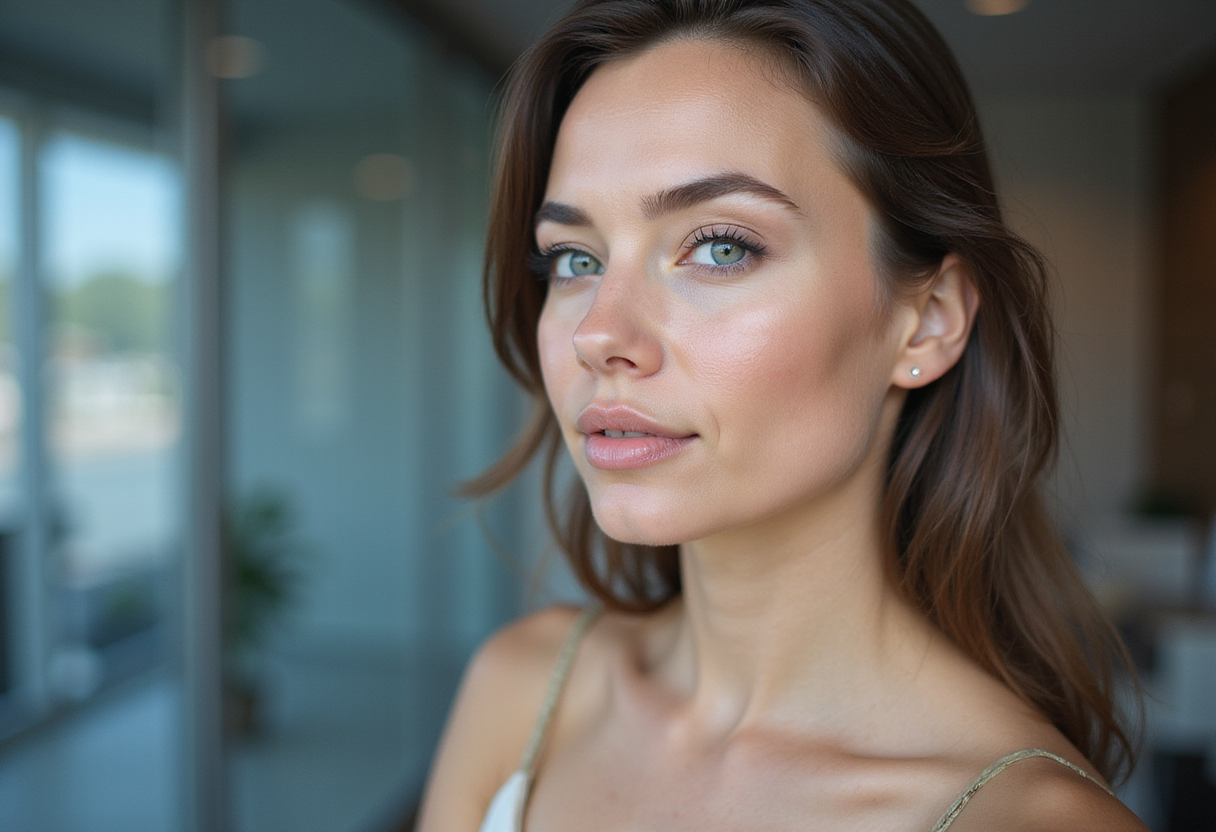
A proposed framework called the Beauty Health Index (BHI) would give clinicians a single, quantifiable score for facial aesthetic health, according to a paper published in Cureus.
The publication, formally titled "The Beauty Health Index (BHI): A Proposed Framework for Quantifying Facial Aesthetic Health," enters a field where outcomes have long rested on subjective photography, patient satisfaction scales, and the trained eye of the injector or laser operator. The authors' working premise: facial aesthetic medicine needs the equivalent of a PASI score — a number that travels across notes, journals, and clinic walls.
Why quantify facial aesthetics now?
Aesthetic procedures keep growing year over year. Fillers, biostimulators, energy-based devices and skin-quality injectables now sit alongside prescription dermatology in everyday practice, and the question of how to compare outcomes has become harder to dodge.
How do you weigh a 12-week result from a hyaluronic acid filler against a series of radiofrequency microneedling sessions? Patients ask. Payers ask. Marketing claims ask louder than anyone, and clinic operators want to know which device earns the capital spend.
The BHI, as proposed, attempts to consolidate multiple dimensions of facial aesthetic health into one composite score. Think of it as the difference between describing a rash and grading it — same skin, different conversation.
What would the BHI actually measure?
The framework's stated aim, derived from its title, is that "facial aesthetic health" can be broken into measurable components and reassembled. Indexes of this kind typically track skin quality, volume distribution, symmetry, surface texture and pigmentation.
The BHI's specific domains are not detailed in the available source, but its purpose — quantification of an otherwise impressionistic field — is the contribution itself.
That matters for two reasons. First, it gives clinicians a shared language when discussing outcomes across studies, devices, and injector techniques. Second, it gives patients a benchmark they can actually understand without a mirror in the room.
What does this change for the practicing dermatologist?
Not much, yet. The BHI is proposed, not validated. No clinical trial has used it. No regulatory body has adopted it. No society guideline has endorsed it.
Any clinic that wants to deploy the BHI in patient consultations will need to wait for validation studies and, critically, the reference ranges that tell you what score corresponds to "typical" and what delta signals a meaningful change.
Still, the proposal signals a directional shift. The aesthetic literature is moving from descriptive to numerical, slowly, the way psoriasis scoring did in the 1990s. Once a validated index exists, device makers and injectable manufacturers will face pressure to report BHI deltas alongside their before-and-after galleries — and that is when the marketing claims start getting awkward.
What to watch
Three signals will tell you whether the BHI takes hold.
- Whether independent groups adopt it in published trials rather than the originating authors.
- Whether the framework expands beyond its initial validation cohort — age, Fitzpatrick type, sex, and ethnicity all matter for any facial assessment tool, and a tool that does not generalize is not a tool.
- Whether patients ever see the number, or whether it stays a clinician-facing metric buried in the chart.
A composite aesthetic score, validated and broadly adopted, would not transform dermatology overnight. It would, however, give the field a way to argue from numbers instead of photographs — and that, for an evidence-based specialty built on PASI and EASI and Breslow, is the move worth watching.
Source: Google News: Aesthetic medicine
Sophie Lindqvist
Show full bio
Market editor covering people, launches and day-to-day practice in Clinical dermatology, inflammatory skin disease and biologics at Derm Field.