Family Gift to UNM Aims to Widen Dermatology Access in New Mexico
Updated
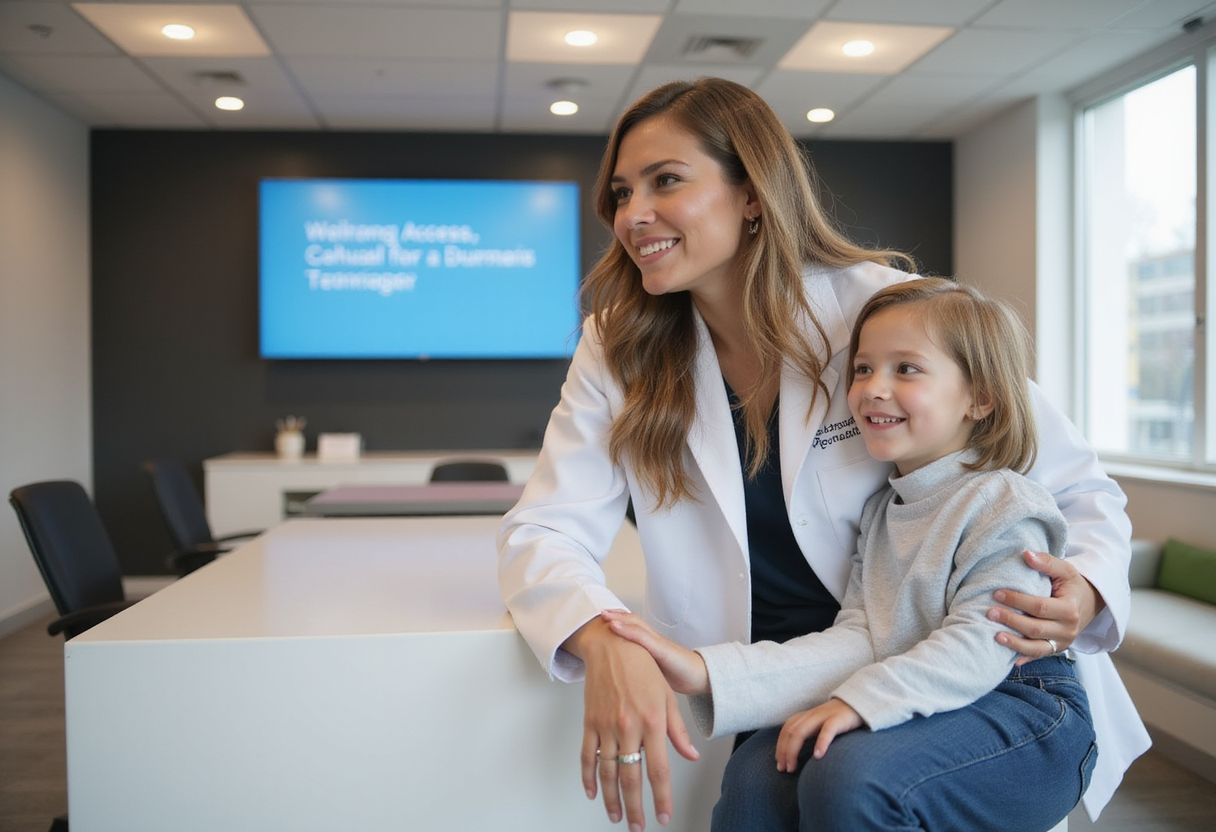
A family's donation to The University of New Mexico will expand access to dermatology care across New Mexico, according to an announcement from UNM Health Sciences.
The gift arrives at a moment when access to dermatologic care in New Mexico ranks among the most constrained in the United States. The state has long struggled with a thin bench of board-certified dermatologists, with specialists concentrated in the Albuquerque–Santa Fe corridor while rural and frontier counties rely on outreach clinics, teledermatology visits, or long-distance travel for diagnosis and treatment of skin disease.
That shortage carries clinical consequences. Patients with inflammatory conditions such as psoriasis, atopic dermatitis, and acne frequently face delayed diagnosis and interrupted therapy when the nearest dermatologist is hours away. Skin cancer detection is also at stake: New Mexico's high-altitude, high-ultraviolet environment elevates sun-exposure risk, and delays in evaluating suspicious pigmented lesions can push patients to later-stage presentations before a biopsy is ever performed.
For dermatology practices and health systems watching the funding environment, the UNM announcement is a reminder of a trend that has accelerated over the past decade: philanthropy is increasingly filling gaps that fee-for-service revenue and graduate medical education funding alone cannot close. Departmental gifts of this kind typically support several levers of access, and donors and institutions generally direct them toward one or more of the following.
Clinical capacity. Gifts often fund new or expanded clinic sessions, equipment for dermatologic surgery, and outreach sites that bring specialists to underserved communities on a rotating schedule. In states like New Mexico, where a single academic department may anchor care for a vast catchment area, even modest additions to clinic capacity can shorten wait times that otherwise stretch to months.
Training the workforce. Academic dermatology depends on residency positions to replenish regional supply. Funded positions, fellowships, and training infrastructure frequently sit behind named gifts, because residency slots are expensive and Medicare-supported caps limit how many institutions can sponsor on public dollars alone. A donation that expands the training pipeline in New Mexico would address the shortage at its root, since dermatologists disproportionately practice near where they train.
Telehealth and distance care. Store-and-forward teledermatology has become a practical bridge in frontier states, allowing primary care clinicians to transmit images and histories for specialist review. Donor funds sometimes underwrite the platforms, staffing, and triage workflows that make such programs sustainable outside of grant cycles.
Patient support. Out-of-pocket costs, travel burden, and co-pay assistance remain practical barriers to continuity of care for chronic skin disease. Targeted funds can subsidize biologics access, phototherapy attendance, and follow-up visits for patients who would otherwise defer treatment.
UNM Health Sciences did not detail in the announcement headline the specific programs the family's gift will support, the dollar amount involved, or the timeline for implementation. What the commitment signals, regardless of those specifics, is that New Mexico's access problem has attracted private capital aimed at structural solutions rather than one-off charitable care.
For clinicians in the region, the practical questions that follow an announcement like this one are concrete. Will the funding add clinic sessions in specialties where backlogs are deepest — medical dermatology for inflammatory disease, Mohs surgery for nonmelanoma skin cancer, or pediatric dermatology? Will it fund additional residency positions or faculty lines that expand the teaching footprint? And will rural outreach and teledermatology capacity grow enough to reach the frontier counties where a dermatology visit can require a full day of driving?
The stakes are measurable. In inflammatory disease, delayed specialty care correlates with prolonged uncontrolled disease and poorer responses once therapy begins; in skin cancer, earlier evaluation of suspicious lesions remains the single most effective lever for favorable outcomes. Access, in other words, is not an administrative abstraction in dermatology — it is a determinant of disease control and survival.
The UNM donation also lands within a broader national conversation about the maldistribution of dermatologists. Specialty workforce analyses have repeatedly shown that dermatology density clusters in affluent metropolitan areas, leaving wide swaths of the Mountain West and rural America underserved. Academic centers such as UNM function as the safety-net backstop in those regions, and their capacity to recruit faculty, train residents, and run outreach depends heavily on funding streams beyond clinical revenue.
Whether this family's gift becomes a template for other academic dermatology departments in underserved states will depend on how transparently UNM reports the outcomes — wait-time reductions, added clinic volume, new training positions — that the funding is intended to produce. Donors and department chairs alike increasingly tie such gifts to named, measurable programs, and the dermatology community will watch New Mexico for evidence that targeted philanthropy can move access metrics in a state where the gap between need and supply has persisted for decades.
As the programs funded by the gift take shape, expanded access to dermatologic care for New Mexico's rural and underserved patients moves from aspiration to implementation, with outcomes worth tracking for any department confronting the same shortage.
Source: Google News: Dermatology
Olivia Hart
Show full bio
News editor covering technology and product news in Clinical dermatology, inflammatory skin disease and biologics at Derm Field.