Fish in Maternal Diet Linked to Lower Infant Colic and Eczema Risk
Updated
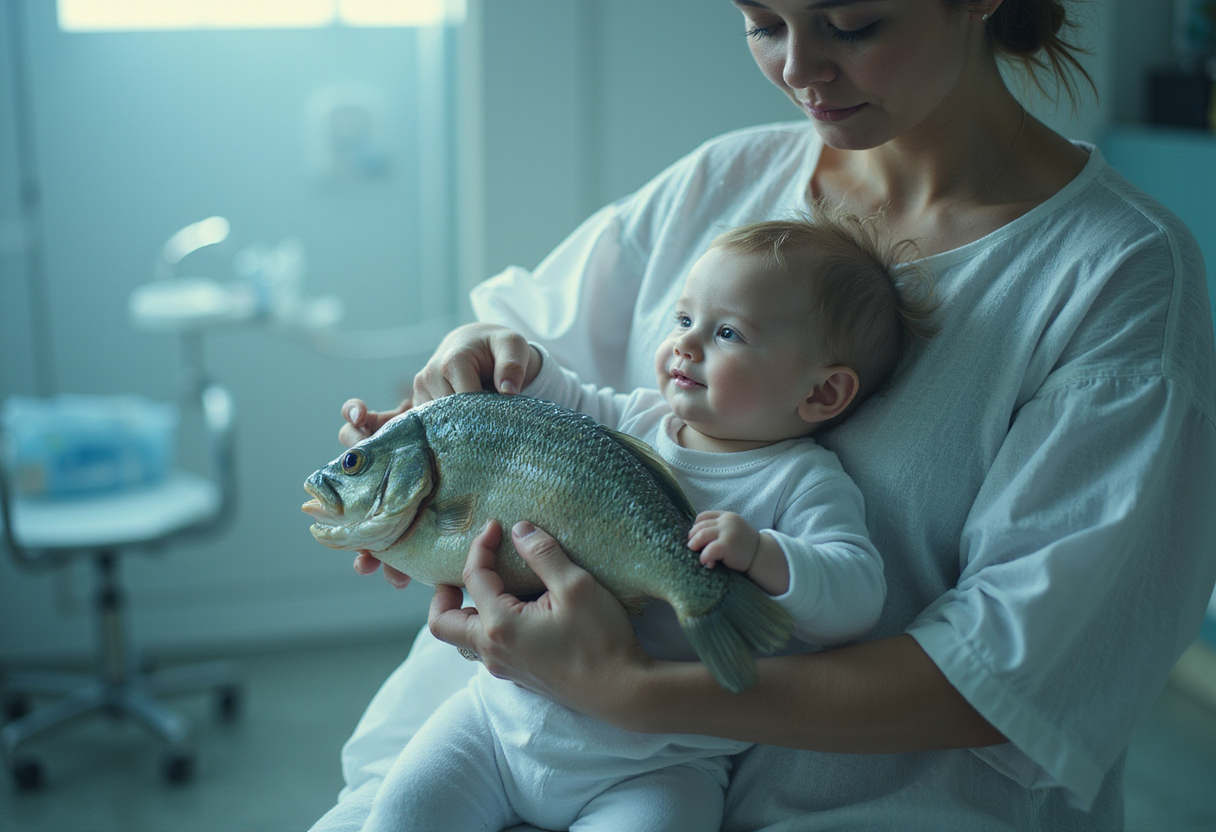
Fish consumption during pregnancy may shield infants from colic and eczema, according to a report published by Medscape.
The headline finding lands squarely in pediatric dermatology territory: maternal diet, not infant treatment, as the potential lever. Eczema — atopic dermatitis in clinical terms — affects a substantial share of infants, and colic compounds distress in the first months of life. A maternal nutritional exposure that could reduce both would carry real weight for prenatal counseling.
What does the claim actually cover?
The Medscape report links two distinct infant outcomes to one maternal behavior: eating fish during pregnancy. The mechanism isn't specified in the available summary, but the hypothesis fits an established line of inquiry. Fatty fish delivers long-chain omega-3 polyunsaturated fatty acids, which researchers have studied for years as modulators of early immune development.
Dermatologists will recognize the broader context. Guidelines from groups such as the American Academy of Pediatrics have already softened on allergenic-food avoidance in pregnancy, and some now lean toward exposure rather than restriction. Fish sits at the center of that debate — nutrient-dense, but historically flagged for mercury content.
Why the maternal-diet angle matters for skin
Atopic dermatitis often announces itself in the first six months of life. Prevention research has increasingly looked upstream of the infant — to the intrauterine environment and the maternal diet that shapes it.
If fish intake during pregnancy lowers eczema incidence, the intervention window shifts to obstetrics and preconception care. Dermatologists treating atopic families would gain a concrete, low-cost counseling point: what a mother eats before birth may matter as much as what the infant avoids afterward.
Colic adds a second dimension. It's not a dermatologic condition, but a shared maternal exposure linking gut and skin outcomes strengthens the case that early immune programming drives both.
What we don't yet know
The available report is a headline-level summary. It doesn't specify cohort size, study design, effect size, or whether the data come from an observational cohort or a randomized trial.
That distinction matters. Observational diet data carry confounding — mothers who eat fish regularly differ in income, education, and overall diet quality. Without adjusted hazard ratios or an intervention arm, "may shield" remains exactly that: a possibility, not a recommendation.
PASO-style endpoints don't exist for infant eczema prevention; trials typically report eczema incidence by age 1 or 2, often scored with EASI or simpler criteria. Readers should watch for those specifics in the full Medscape piece.
Mercury remains the counterweight
Any fish-in-pregnancy guidance has to square with methylmercury advisories. Current FDA and EPA advice directs pregnant women toward low-mercury species — salmon, sardines, tilapia — at two to three servings weekly, while avoiding shark, swordfish, king mackerel, and tilefish. Whether the reported benefit holds across fish types, or tracks only fatty low-mercury species, is a question the summary leaves open.
The counseling takeaway
For now, dermatologists and pediatricians can note the signal without changing standard advice. The recommendation that already exists — regular low-mercury fish consumption in pregnancy — may carry a skin benefit on top of its neurodevelopmental one. That's a low-risk message even at low evidence strength.
The full Medscape report should supply the cohort, the effect estimates, and the dosing detail clinicians need before this moves from interesting to actionable.
Source: Google News: Atopic dermatitis
Tom Whitfield
Show full bio
Senior reporter covering companies, deals and strategy in Clinical dermatology, inflammatory skin disease and biologics at Derm Field.