Hair Follicle Cells Drive Psoriasis Inflammation, EMJ Reports
Updated
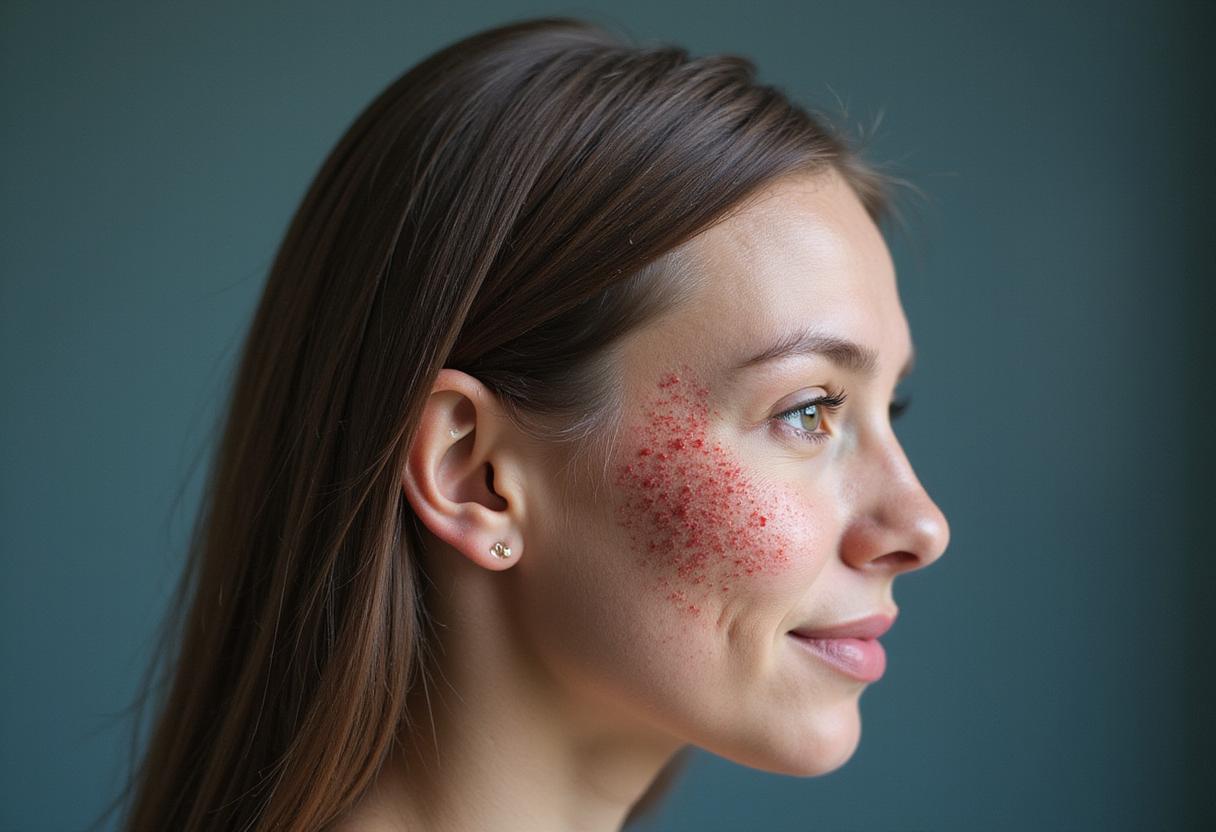
Emerging Medical Journal (EMJ) reporting identifies cells within the hair follicle as active drivers of the inflammatory cascade in psoriasis, rather than bystanders to it. The finding reframes a structure dermatologists pass in every biopsy without pausing: the follicular unit.
Psoriasis is a chronic immune-mediated disease in which keratinocyte hyperproliferation follows a cascade of T-cell–driven cytokine signaling, notably involving IL-23, IL-17 and TNF-alpha. Conventional teaching locates the initiating event in the interfollicular epidermis, where the familiar erythematous, scaly plaques form.
What the report changes
The EMJ item places the follicle inside that initiating loop. Hair follicle cells, on this account, contribute inflammatory signals that help sustain lesional activity. That matters because plaque margins, spongiiform pustules and the Koebner response (lesion formation at sites of skin injury) all cluster where follicular density and trauma intersect.
A caveat belongs here. The source available to Derm Field is a headline-level report. It does not specify the cell populations involved, the cytokines implicated, the model system used, or any effect size. Readers should treat the mechanism as reported, not yet independently verified against primary data.
Why the follicle hypothesis is plausible
The follicle is a recognized immune niche. It harbors resident memory T cells and stem-cell populations with distinct antigen exposure, and perifollicular inflammation is a documented feature of psoriatic histopathology.
If follicular cells help sustain IL-17–axis signaling, the finding would sit alongside an established clinical observation: current biologic therapy targeting that axis, including IL-17 and IL-23 inhibitors, achieves high PASI (Psoriasis Area and Severity Index) responses but rarely clears every plaque. A follicular reservoir could help explain that residual burden.
That last paragraph is interpretation, and it should be read as such. The EMJ report itself makes no claims about treatment implications.
What is not said
Several questions remain open, and the report does not address them:
- Whether the follicular contribution is specific to scalp psoriasis or generalizes to all body sites
- Whether follicle-driven inflammation precedes plaque formation or maintains established lesions
- Whether any existing therapy reaches the follicular compartment preferentially
- Whether the finding derives from mouse models, ex vivo human skin, or patient tissue
Each answer would change how clinicians weigh the result. A mechanism restricted to murine skin carries less weight than one confirmed in human lesional biopsies.
The stakes for practice
Roughly speaking, the follicle hypothesis competes with a simpler picture the way a tributary competes with the main river: neither cancels the other, but the tributary changes where interventions should be aimed. If follicular cells are a genuine inflammatory source, topical and device approaches that under-penetrate the follicle may leave active disease behind.
For now, nothing in the report alters prescribing. PASI-based treatment algorithms, biologic selection and monitoring recommendations remain unchanged. The value of the finding is directional, pointing investigators toward a compartment that standard plaque-centric research has underexplored.
Peer-reviewed publication of the underlying data, including the specific cell types and signaling pathways implicated, is the necessary next step before this finding can inform trial design or, eventually, therapeutic targets.
By Amara Osei for Derm Field
Source: Google News: Dermatology
Amara Osei
Show full bio
Correspondent covering technology and product news in Clinical dermatology, inflammatory skin disease and biologics at Derm Field.