K-Beauty Clinics and Drugstores Prepare for Golden Week as Chinese Spending Tops $270 Million
Updated
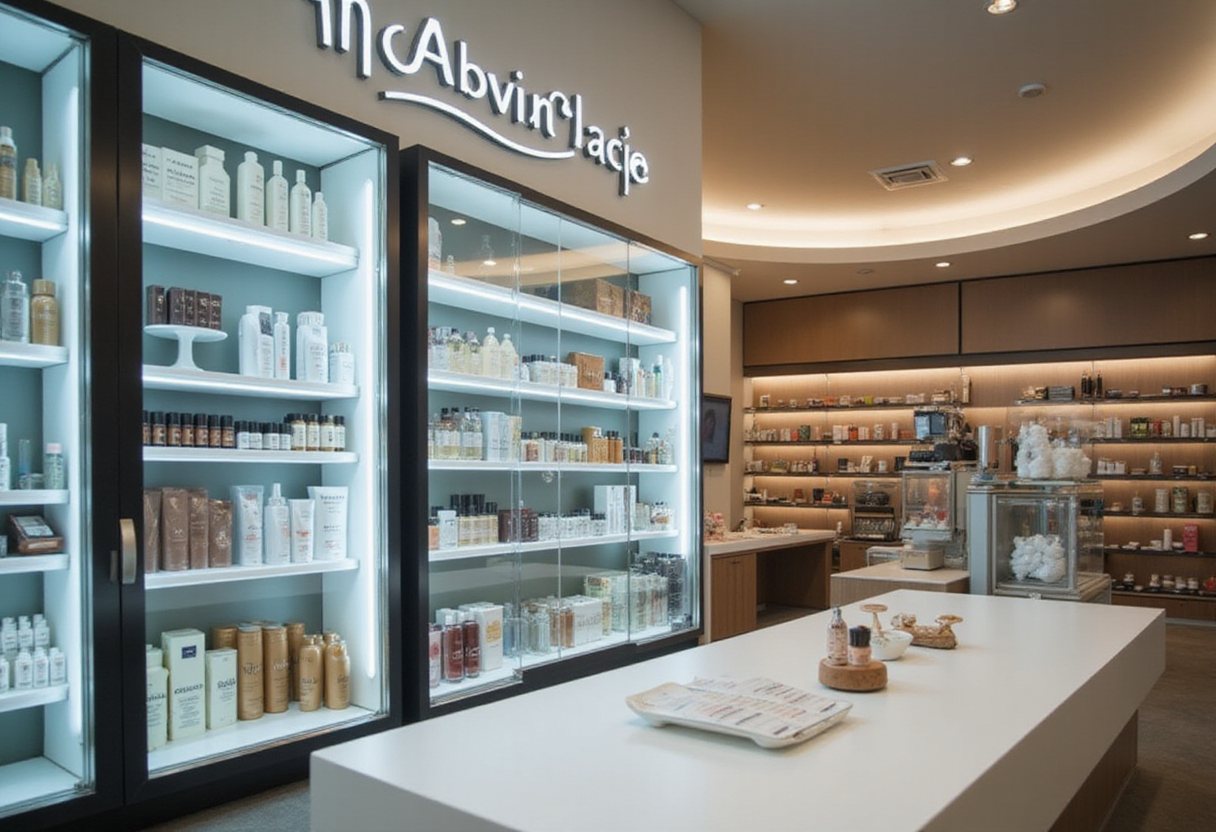
Chinese travelers spent more than $270 million — and Korean dermatology clinics, pharmacies and beauty retailers are now gearing up for Golden Week, the holiday period that has become one of the most lucrative windows on the Korean beauty calendar.
The center of gravity has moved. Where Chinese tourist spending once concentrated in airport duty-free stores, it now flows into Seoul's dermatology clinics and neighborhood drugstores — a shift driven largely by Gen Z and millennial Chinese travelers who arrive with skincare, not shopping-mall luxury, at the top of their lists.
The scene inside a dermatology clinic in Sinsa-dong, one of Seoul's upscale districts, illustrates the trend plainly. On a Tuesday afternoon, the reception area filled with the chatter of Mandarin — a working day, a non-holiday week, and still the clinic's waiting room ran on Chinese conversation.
From duty-free counters to treatment rooms
For years, the Korean beauty industry measured Chinese tourist demand through duty-free sales — cosmetics and luxury goods purchased in bulk at Incheon airport and downtown duty-free complexes. That model is fading. Younger Chinese visitors travel differently: they book individual clinic appointments, browse pharmacy shelves in neighborhoods like Seongsu-dong, and treat dermatological consultation as part of the itinerary rather than an afterthought.
Dermatology clinics in tourist-heavy districts such as Myeong-dong and Sinsa-dong now operate with Mandarin-speaking front-desk staff and treatment menus pitched at foreign visitors. Drugstores have become a second front in the same battle. A related KED Global report documented how pharmacies — once purely dispensary businesses — have turned into retail battlegrounds for K-beauty, with foreign tourists browsing beauty products alongside over-the-counter medicines.
A pattern, not a spike
The Golden Week build-up follows a longer trajectory. Industry data has shown foreign tourists increasingly flocking to South Korea not only for shopping and K-pop but for skincare, aesthetic treatments and beauty products — with dermatology clinics at the center of that demand. Klook, the global travel platform, ranked South Korea among the top five most desired travel destinations for millennials and Gen Z worldwide in 2026, giving clinic operators a deep pipeline of prospective patients.
The $270 million figure for Chinese spending gives the scale. The composition of that spending is the more consequential fact for dermatology practices: money that once moved through duty-free tills now lands at reception desks in Sinsa-dong and pharmacy counters in Seongsu-dong.
What it means for practices
For Korean dermatology operators, the Golden Week period functions as a stress test of capacity — appointment volume, language staffing and consult throughput — and as a marketing benchmark. Clinics that convert holiday-season visitors into returning international patients build revenue that outlasts the travel season itself.
For drugstores, the calculus is similar. Shelf space devoted to K-beauty actives and skincare lines now competes directly with clinic-adjacent retail, and foreign foot traffic has turned neighborhood pharmacies into destination stores in their own right.
As Golden Week approaches, clinics and pharmacies across Seoul are staffing up and stocking accordingly — betting that the Mandarin-filled waiting room on an ordinary Tuesday afternoon was not an anomaly but the new baseline.
Original: kedglobal.com
Sophie Lindqvist
Show full bio
Market editor covering people, launches and day-to-day practice in Clinical dermatology, inflammatory skin disease and biologics at Derm Field.