NHS Launches Largest-Ever AI Rollout to Speed Skin Cancer Care
Updated
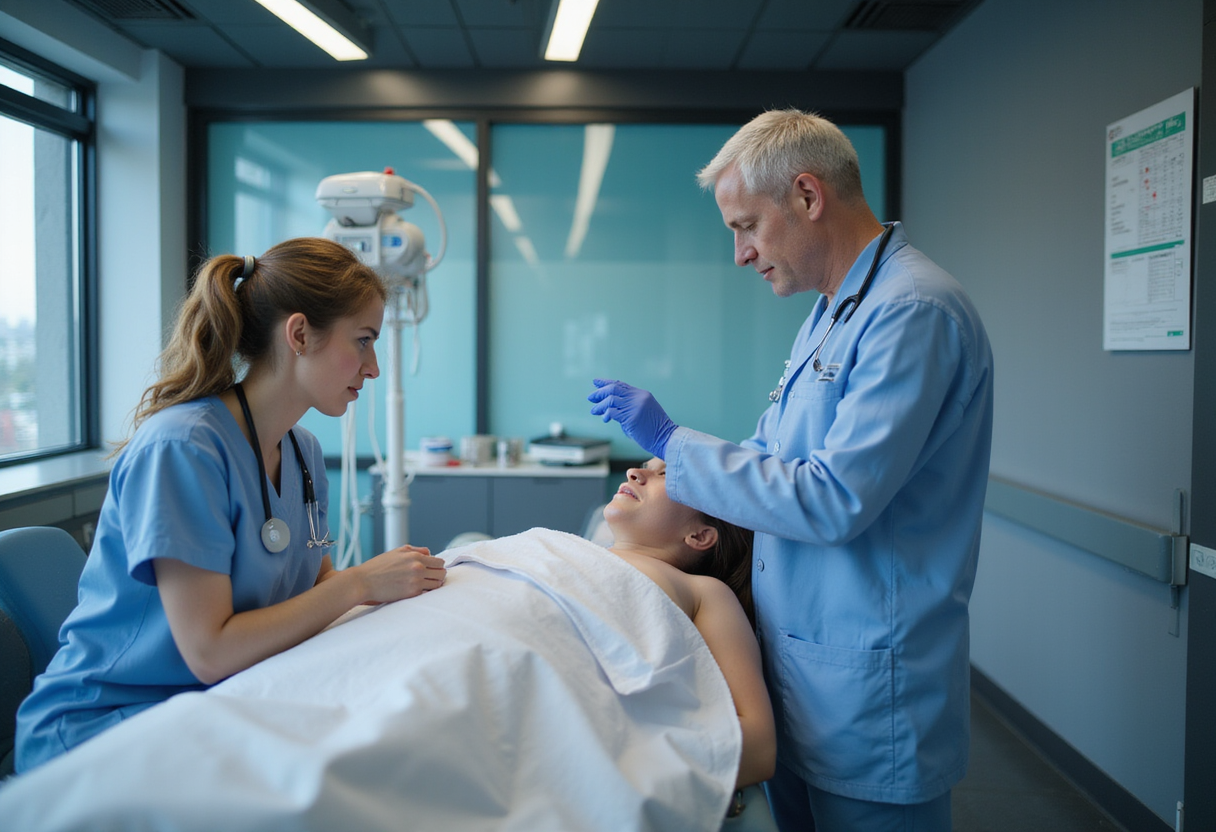
The NHS is rolling out artificial intelligence technology across its skin cancer pathway in what the health service describes as its biggest rollout of this kind to date. The announcement, reported by Wokingham.Today, positions AI-assisted triage as a national infrastructure project rather than a pilot confined to a handful of trusts.
The stakes are structural. Skin cancer pathways in the UK have long depended on the two-week-wait referral system, in which patients with suspected melanoma (the most aggressive form of skin cancer) must be seen by a specialist within 14 days of an urgent referral. Demand on that system has grown faster than dermatology workforce capacity. An AI deployment at national scale is, in effect, a bet that algorithmic triage can absorb some of that mismatch.
What does the rollout actually involve?
The source announcement confirms the scale of the deployment — the largest of its kind in the NHS — and its purpose: accelerating skin cancer care. What it does not specify is equally important, and the gaps deserve scrutiny before clinicians redraw their referral workflows.
Details not stated in the announcement include:
- The number of NHS trusts or clinics receiving the technology, or a deployment timeline with milestones
- Which algorithm or vendor is being used, and whether it holds UKCA or CE marking for the stated indication
- The reported sensitivity and specificity of the tool in any prospective clinical validation — the figures a dermatologist would want before delegating triage decisions
- Whether the AI acts autonomously, or flags lesions for human review — the difference between a decision-support tool and a decision-maker
Each of these omissions leaves a claim untested. A "biggest rollout" headline measures deployment volume, not clinical performance.
Why scale is the story here
AI dermatology tools are not new to the NHS; several trusts have trialed image-analysis systems that assess photographs of lesions for likelihood of malignancy. The novelty is national reach. Previous evaluations were single-site or regional, which limits how far their results generalize across skin types, lesion presentations and referral populations.
A national rollout carries a different evidentiary burden. Algorithms trained predominantly on lighter skin tones have shown weaker performance on darker phototypes in independent assessments of comparable tools. The NHS has not, in this announcement, stated how the deployed system performs across the full range of skin tones it will now encounter. Until it does, the promise of faster care comes with an unquantified equity caveat.
The benefit and the caveat
The claimed benefit is speed: earlier identification of suspected skin cancers and, by extension, earlier treatment. For melanoma, timing is not incidental — five-year survival is far higher when the tumor is thin at excision than when it has already spread, which is why Breslow thickness (the measured depth of melanoma invasion in millimeters) at diagnosis matters so much. Any triage tool that shortens the interval from suspicious lesion to specialist assessment attacks the pathway at its most time-sensitive point.
The countervailing risk is equally concrete. An algorithm that dismisses a melanoma as benign does not merely fail to help; it can remove a patient from the urgent pathway altogether. Faster average care means little to the patient whose cancer is the algorithm's false negative. No rollout announcement can settle that question — only prospective data can.
What to watch next
The credible markers of progress will be specific and dated: an NHS evaluation report with sensitivity and specificity figures from the live deployment, a stated number of trusts live by a stated quarter, and an audit of false-negative rates against the pre-AI baseline. The Royal College of Physicians and national dermatology bodies will reasonably demand exactly that dataset before endorsing wider clinical reliance on the tool. Until those numbers arrive, this is a significant infrastructure commitment whose clinical payoff remains an open, testable question — one the dermatology community will be watching closely.
Source: Google News: Skin cancer
Amara Osei
Show full bio
Correspondent covering technology and product news in Clinical dermatology, inflammatory skin disease and biologics at Derm Field.