Cosmeceuticals & Skincare Science
PDRN Serums Under the Microscope: Dermatology Times Weighs In
Updated
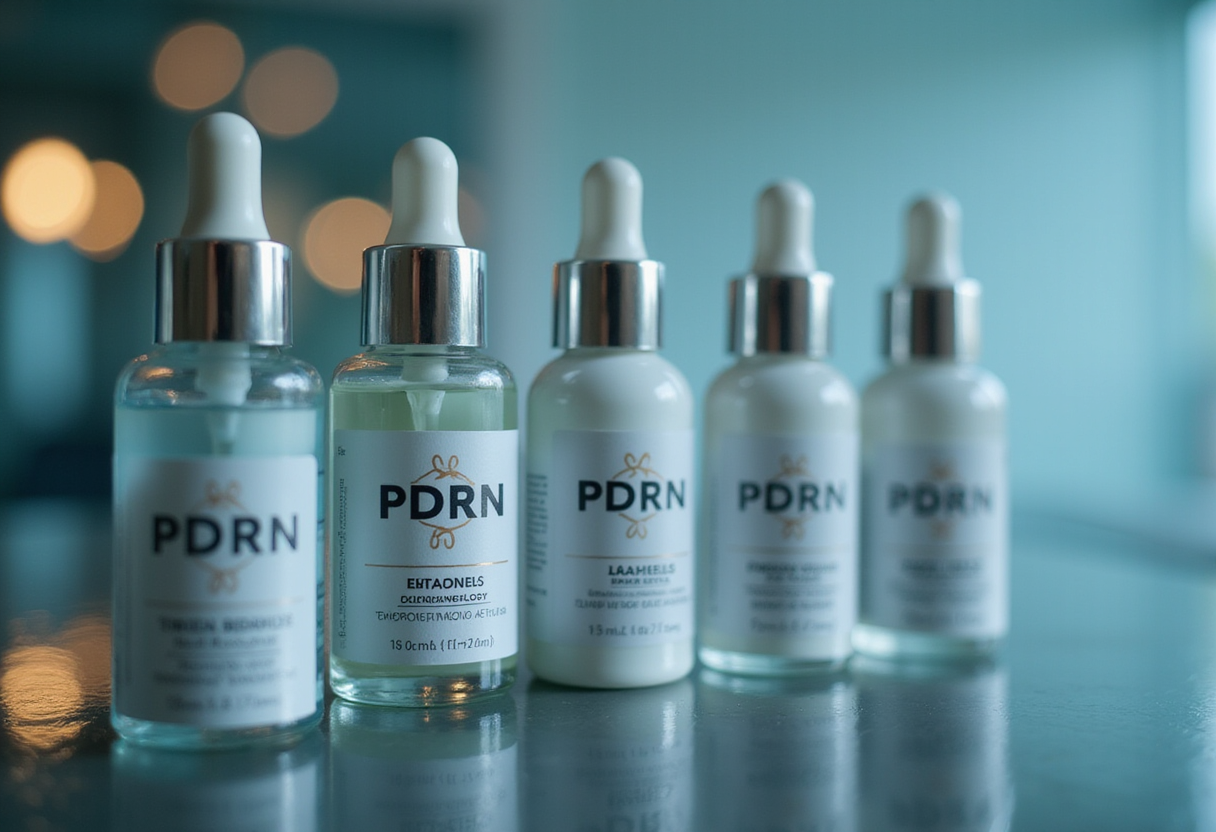
Dermatology Times has turned its Social Media Mythbusters series on polydeoxyribonucleotide serums, the injectable-derived ingredient now being marketed aggressively across TikTok and Instagram as a regenerative skin booster sold in topical form.
PDRN — a fragmented DNA polymer derived most commonly from salmon sperm or trout testes — has a genuine clinical footprint, but almost entirely in the injectable space. In aesthetic medicine, PDRN injections are used off-label and in some regulated markets as mesotherapy and skin-booster agents, where the proposed mechanism involves adenosine A2A receptor stimulation, promotion of fibroblast activity, and enhanced wound healing through angiogenesis. That injectable evidence base is precisely what marketers of topical PDRN serums now invoke — and it is here that clinicians are drawing a sharp line.
The core pharmacologic problem is delivery. PDRN is a large, charged, water-soluble polynucleotide. It does not cross intact stratum corneum to any meaningful degree, and no widely accepted penetration-enhancing vehicle has demonstrated dermal bioavailability of topical PDRN in human skin. An ingredient that works when deposited directly into the dermis via needle cannot be assumed to work from a dropper bottle. The gap between the injection studies cited in marketing copy and the serum actually being sold is, in the language of the Mythbusters format, the myth itself.
This matters because the claims travel faster than the data. Social platforms reward before-and-after imagery and mechanism-sounding vocabulary — "DNA repair," "cell regeneration," "Korean skin booster in a bottle" — while the studies supporting those phrases generally involve intradermal or subcutaneous administration, animal models, or in vitro fibroblast assays. None of those designs establishes that an over-the-counter serum at cosmetic-grade concentration replicates injectable outcomes. For dermatologists counseling patients, the practical framing is straightforward: PDRN is not pseudoscience, but topical PDRN is not injectable PDRN, and the evidence class for the former is substantially weaker than the marketing implies.
The pattern will be familiar to anyone who has watched the cosmeceutical category cycle before. An ingredient with credible clinical signal in one delivery modality gets reformulated into a consumer product, the original citations are carried over, and the concentration used in the serum often goes undisclosed or falls far below anything studied. Patients rarely distinguish between a published trial of injected polynucleotides and a brand's reference to that same trial next to a topical. That slippage is where the counseling burden lands on the clinician.
For practices fielding patient questions, a useful script has three parts. First, validate the injectable literature — patients who have read about PDRN skin boosters in Korea and Italy have not invented it. Second, distinguish modality: intradermal delivery and topical application are pharmacologically different propositions, and no current evidence equates them. Third, redirect toward actives with established topical evidence — retinoids, vitamin C, niacinamide — for the collagen and texture endpoints that PDRN serums promise.
The broader signal for the specialty is that regenerative aesthetics is migrating from the clinic to the consumer shelf faster than regulators or journals can annotate it. Polynucleotides, exosomes, and growth-factor-themed topicals all follow the same trajectory. As Dermatology Times' Mythbusters treatment of PDRN serums makes clear, the dermatologist's role is less debunking than dose-and-delivery literacy — and expect that literacy to be tested again with the next injectable-turned-serum ingredient already trending in the queue.
Source: Google News: Dermatology
Olivia Hart
Show full bio
News editor covering technology and product news in Clinical dermatology, inflammatory skin disease and biologics at Derm Field.