Regeneron Shares Fall as Skin Cancer Therapy Misses in Late-Stage Trial
Updated
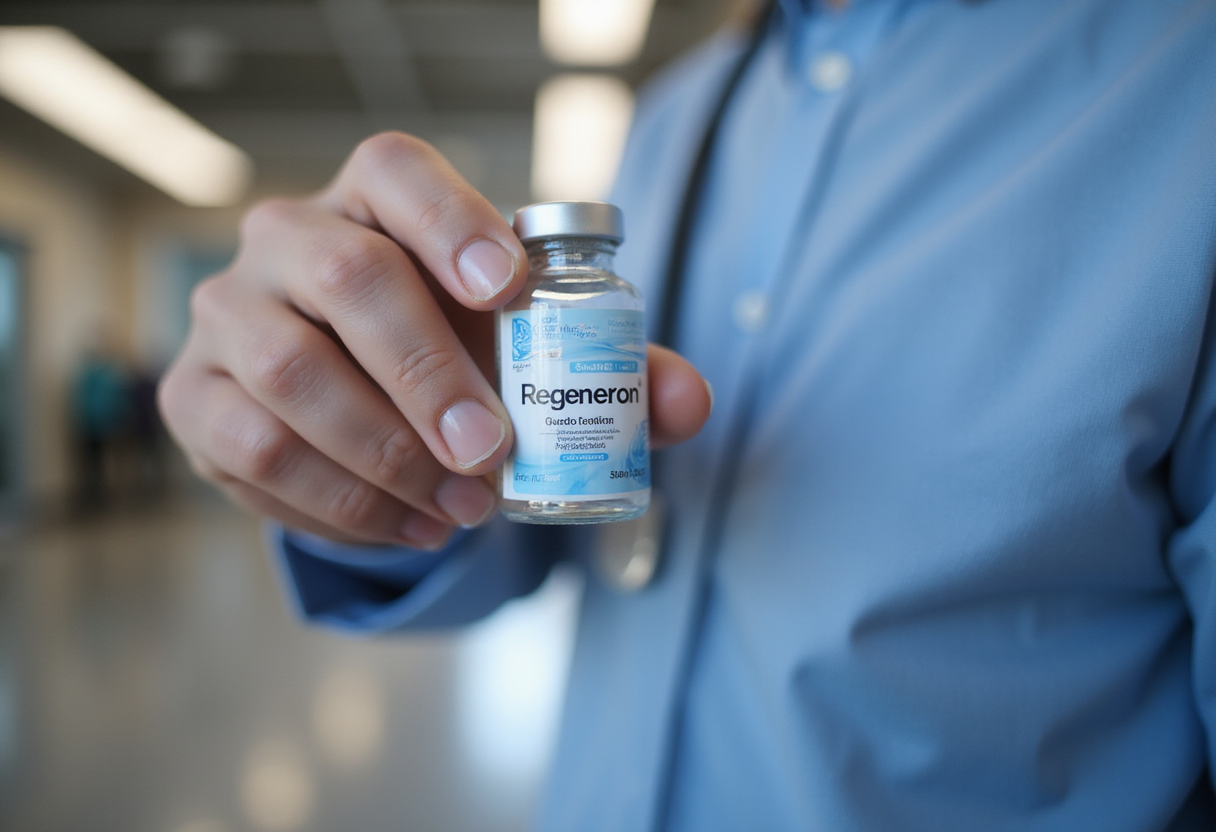
Regeneron Pharmaceuticals shares fell after the company reported that one of its skin cancer treatments failed a late-stage clinical trial, Reuters reports.
The setback marks a rare late-stage miss for a company that has built much of its oncology franchise on antibody-based approaches to cutaneous malignancies. A phase 3 failure at this stage of development carries significant weight: the trial design has already cleared earlier-phase efficacy signals, the patient cohort has been enrolled at scale, and the regulatory pathway has typically been mapped with the FDA.
For dermatologists and oncology clinicians who follow cutaneous carcinoma therapeutics, the implications are twofold. First, the failed agent will not add to the treatment arsenal for advanced or metastatic skin cancer in the near term. Second, patients enrolled in the trial — and clinicians who referred them — will be watching how the company handles follow-up, including whether any crossover, continued-access, or subgroup-analysis data will be made available.
What a Late-Stage Failure Means in Skin Cancer Drug Development
Phase 3 trials in skin cancer typically recruit hundreds of patients across multiple centers and are designed to confirm, against a control arm, the efficacy endpoints that smaller early-phase studies suggested. When such a trial misses its endpoint, the consequences cascade quickly: the investigational drug's regulatory filing timeline collapses, and the commercial assumptions priced into the developer's stock reset.
That market reaction was immediate for Regeneron. Investors sold the stock on the news, reflecting both the lost near-term revenue opportunity for the specific indication and broader questions about the pipeline program in question.
The company has not yet, per the Reuters report, detailed the full trial dataset. Key clinical questions remain open, including:
- Which specific skin cancer indication and disease stage the trial targeted
- Whether the miss reflected a failure on the primary endpoint alone or on secondary endpoints as well
- Whether any responder subgroups emerged that could support a narrower development path
- Whether the company will present the data at an upcoming medical congress or publish in a peer-reviewed journal
The Competitive Context
Skin cancer remains one of the most active areas in dermatologic drug development, with multiple developers pursuing programs across melanoma, cutaneous squamous cell carcinoma, Merkel cell carcinoma and other cutaneous malignancies. A phase 3 failure by a large-cap developer like Regeneron does not slow the field overall, but it does reshape the competitive timeline — potentially extending the window for rival programs targeting the same indication to reach market first or consolidate standard-of-care positioning.
For clinical practices, the practical effect is straightforward: treatment algorithms for the affected indication remain unchanged. Clinicians who had anticipated a new option based on earlier-phase hype or conference presentations should recalibrate expectations until full data are disclosed.
What Comes Next
Regeneron faces the standard post-failure playbook decisions: whether to conduct a full data review to identify salvageable development paths, whether subgroup or biomarker-selected populations justify a new trial, and whether to redirect resources toward other pipeline candidates. Companies frequently mine failed phase 3 datasets for mechanistic insight, and occasional regulatory successes have emerged from precisely such analyses.
The company's next disclosure — whether a press release with topline numbers, an SEC filing, or a data presentation — will determine how the dermatology-oncology community interprets the failure. Until then, the stock decline stands as the market's summary judgment on a late-stage program that did not deliver.
Full trial details, including the drug candidate's name, indication, endpoint performance and any company commentary, are expected as Regeneron communicates further in the coming days.
Source: Google News: Skin cancer
Sophie Lindqvist
Show full bio
Market editor covering people, launches and day-to-day practice in Clinical dermatology, inflammatory skin disease and biologics at Derm Field.