Risankizumab Tops Ustekinumab on Complete Clearance in Pediatric Psoriasis
Updated
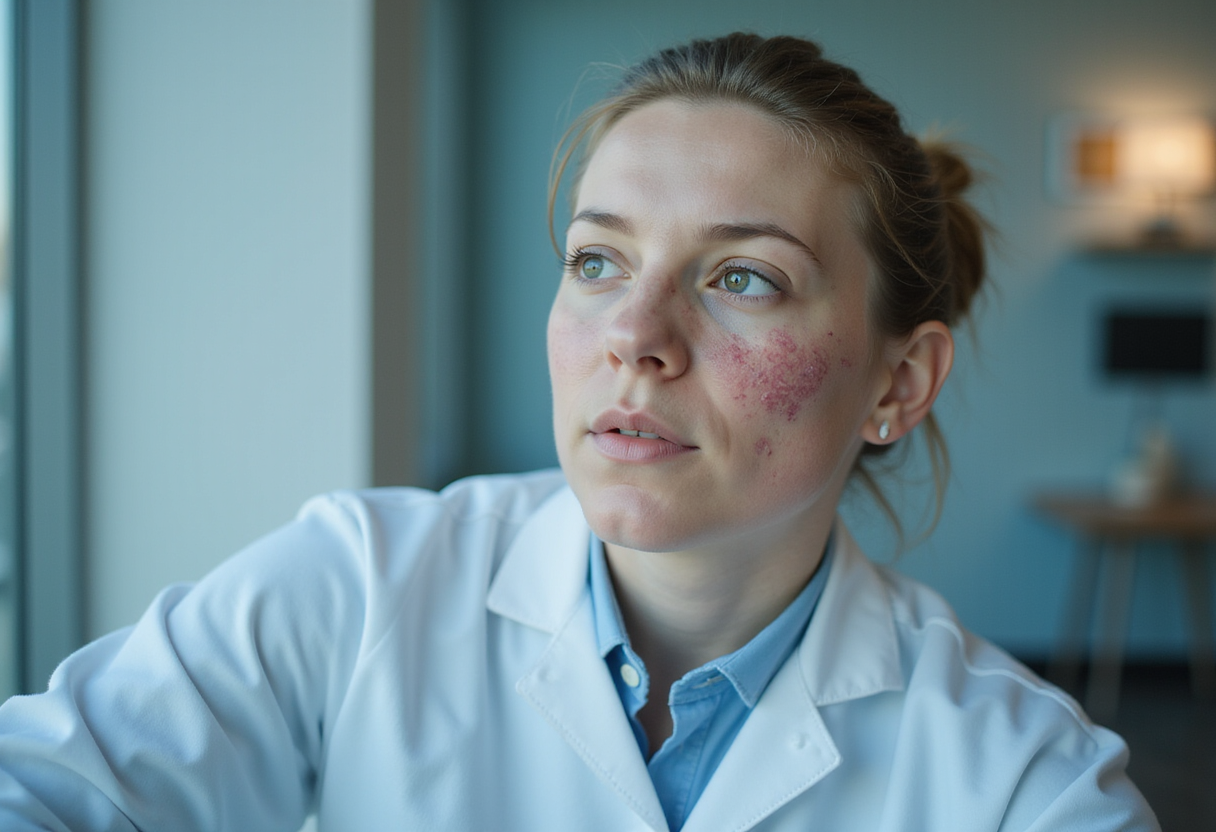
In the phase 3 OptIMMize-1 trial, 40.7% of pediatric patients aged 12 to 18 years receiving risankizumab reached complete skin clearance (PASI-100) at week 16 — more than double the 17.9% rate observed in the ustekinumab comparator arm.
The randomized head-to-head period included 54 adolescents on risankizumab and 28 on ustekinumab. Investigators led by Nina Magnolo, MD, of University Hospital Münster, Germany, reported the multicenter findings in the British Journal of Dermatology, published online September 26, 2026 (doi: 10.1093/bjd/ljag403).
What did the trial enroll?
OptIMMize-1 enrolled 137 pediatric patients aged 6 years and older with moderate to severe plaque psoriasis across four sequential parts:
- Parts 1 and 2: patients aged 12 to 18
- Parts 3 and 4: patients aged 6 to 12
- Parts 1 and 3: pharmacokinetic evaluations to inform pediatric dosing
- Parts 1, 2, and 4: 52-week, open-label treatment periods
Period A of Part 2 randomized patients 2:1 to risankizumab or ustekinumab for 16 weeks. Period B extended treatment or implemented withdrawal for risankizumab responders. Period C provided a 16-week re-treatment window for patients who flared.
How did endpoints compare at week 16?
In the Part 2 adolescent cohort, week 16 response rates tracked closely between arms on most measures:
- sPGA 0/1: 79.6% risankizumab vs 75.0% ustekinumab
- sPGA 0/1 with ≥2-grade improvement: 68.5% vs 67.9%
- PASI-75: 85.2% vs 85.7%
- PASI-90: 64.8% vs 60.7%
- PASI-100: 40.7% vs 17.9%
"Week 16 response rates were similar," Magnolo and colleagues wrote, singling out PASI-100 as the clearest discriminator favoring the IL-23 inhibitor.
How did the younger cohort respond?
Part 4 enrolled 30 children aged 6 to 12. At week 16:
- sPGA 0/1: 90.0%
- sPGA 0/1 with ≥2-grade improvement: 83.3%
- PASI-75: 86.7%
- PASI-90: 76.7%
- PASI-100: 43.3%
Responses held or improved at 52 weeks. Patients switching from ustekinumab to risankizumab gained further skin and itch improvements, "demonstrating the potential for patients to achieve a high degree of clinical improvements with risankizumab after switching treatment," the investigators wrote.
What about safety and quality of life?
Risankizumab was well tolerated through 52 weeks, with adverse events consistent with the adult psoriasis program. Itch severity and quality-of-life measures, captured only in Part 2, improved at weeks 16 and 52.
Why does this matter for pediatric dermatology?
Pediatric patients "experience a greater degree of itch compared with adults, which can negatively impact self-esteem, family and social relationships, sleep, and school life," Magnolo and colleagues wrote in their rationale. Real-world evidence for systemic and biologic use in children remains limited, and initiation timing lacks consensus.
Risankizumab is an IgG1 monoclonal antibody targeting the p19 subunit of interleukin-23, already approved for adults with moderate-to-severe plaque psoriasis. The investigators closed the paper by stating that their findings "support treatment of paediatric patients with moderate-to-severe psoriasis with risankizumab."
Whether regulators extend the indication to children 6 and older, and whether payers follow, will determine how quickly the complete-clearance edge seen in OptIMMize-1 reaches routine pediatric practice.
Original: mumcdnstorage.blob.core.windows.net
Tom Whitfield
Show full bio
Senior reporter covering companies, deals and strategy in Clinical dermatology, inflammatory skin disease and biologics at Derm Field.