Saliva Test Could Flag Early-Onset Atopic Dermatitis Before Rash
Updated
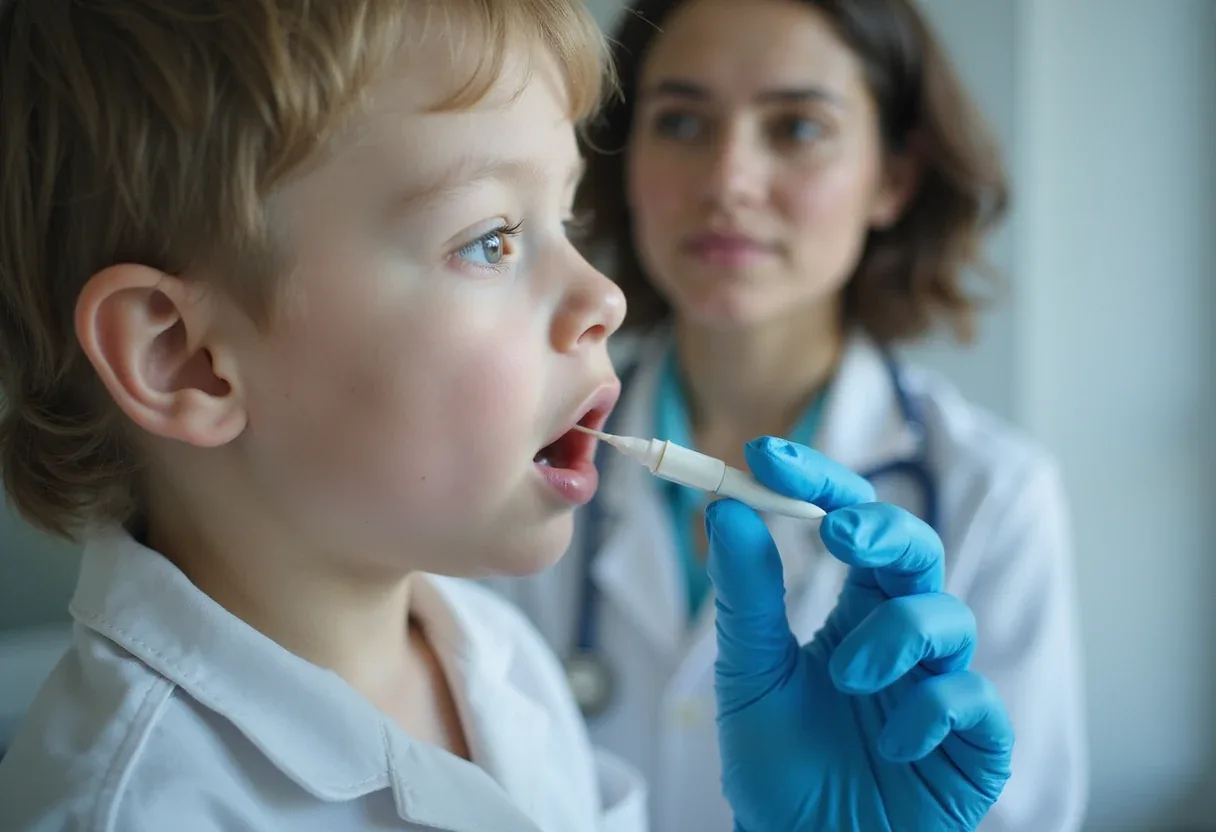
Researchers have found that salivary biomarkers may predict early-onset atopic dermatitis, according to a new study reported by Medical Dialogues. That's the headline claim, and it lands in a space where dermatology has long wanted better tools: identifying infants at risk before the first eczema patch appears.
Why saliva? Because it's cheap, non-invasive and repeatable. Blood draws in newborns are nobody's favorite workflow. A spit-based panel, if validated, could slot into routine well-child visits without adding needle stress for parents already anxious about a family history of atopy.
What did the study actually look at?
The investigation examined whether markers measurable in saliva correlate with the later emergence of atopic dermatitis in early life — the early-onset form that typically declares itself in the first months and carries the heaviest long-term atopic-march burden.
The study's framing matters for interpretation. This is predictive work, not diagnostic substitution. The biomarker signal, as reported, points to elevated risk of developing the condition. It does not replace clinical assessment, and the source material gives no sensitivity, specificity or cutoff values to judge screening performance. Hold that caveat firmly.
What does this change for dermatologists?
Right now, risk stratification for infantile AD leans on family history and FLG mutation status, neither of which is routinely ordered. A salivary panel would add a dynamic, repeatable layer — something you could theoretically track over time rather than a static genetic readout.
For practitioners, the practical upside is triage. If a saliva test could flag high-risk infants, emollient supplementation from birth — the strategy tested in trials like the BEEP study — could be targeted to the infants most likely to benefit, rather than applied broadly where effects have proven modest.
It also fits a growing biomarker mood in the field. We already stratify adults with AD by serum TARC, eosinophils and total IgE when choosing systemic therapy. Extending that logic to the cradle, with a gentler sampling method, is a coherent next step rather than a novelty.
The honest caveats
One study is one study. The source report does not specify cohort size, follow-up duration, or which candidate biomarkers carried the signal — cytokines, antimicrobial peptides or microbial metabolites are all plausible candidates, but the data isn't stated and we won't guess.
External validation in independent, larger birth cohorts is the gate this must pass. Then come the standard questions: analytic standardization of saliva collection in infants, reference ranges by age, and whether prediction actually changes outcomes when acted upon.
What comes next
If replication holds, expect the conversation to move toward clinical utility studies — does early biomarker-guided intervention reduce AD incidence or severity, measured on established endpoints such as EASI, in the flagged group? Until then, treat this as a promising signal worth tracking, not a practice changer. The direction — earlier, cheaper, less invasive risk prediction — is one the specialty will likely see much more of.
Source: Google News: Atopic dermatitis
Sophie Lindqvist
Show full bio
Market editor covering people, launches and day-to-day practice in Clinical dermatology, inflammatory skin disease and biologics at Derm Field.