Two-Center Study Examines SCARs With Overlapping Features
Updated
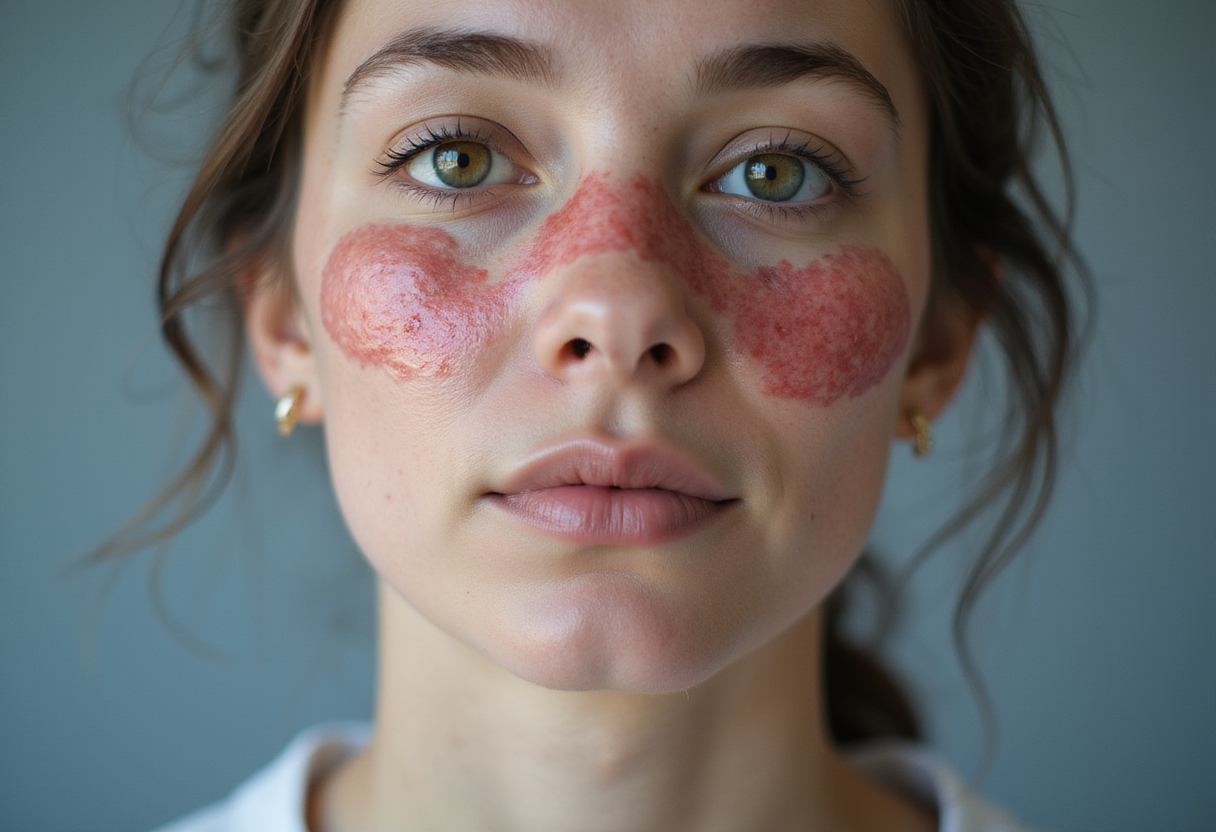
A retrospective study published online October 8, 2026, in the Journal of the American Academy of Dermatology examines severe cutaneous adverse reactions (SCARs) presenting with overlapping features, drawing on case data from two tertiary referral centers.
The paper, authored by Valentina Caputo, Stefania Guida, Vanessa Bottino, Alessandro Valle, Jan W. Schroeder, Franz W. Baruffaldi-Preiss, Emanuela Bonoldi, and Franco Rongioletti, addresses a persistent diagnostic problem in inpatient and consult dermatology: severe drug eruptions that do not fit cleanly into a single category.
Why do overlapping SCARs matter?
SCAR entities such as Stevens-Johnson syndrome/toxic epidermal necrolysis (SJS/TEN), drug reaction with eosinophilia and systemic symptoms (DRESS), and acute generalized exanthematous pustulosis (AGEP) carry high morbidity and mortality, and management decisions — withdrawal of the culprit drug, corticosteroid or biologic therapy, supportive care intensity — depend heavily on correct classification.
In clinical practice, however, patients frequently present with hybrid phenotypes: a DRESS-like eruption with pustulosis, a TEN-pattern reaction evolving from DRESS, or cases where RegiSCAR criteria fail to assign a definitive label. The retrospective design of the new study reflects that reality, relying on documented cases rather than predefined enrollment criteria, which typically exclude borderline or mixed presentations.
The two-tertiary-center structure gives the series referral-level acuity. Tertiary centers concentrate the most severe and diagnostically ambiguous cutaneous drug reactions, so the cohort is likely skewed toward exactly the overlap cases the authors set out to characterize — the patients who most often delay definitive treatment while classification is debated.
What can readers expect from the design?
As a retrospective chart-review study, the work catalogs real-world presentation, laboratory findings, histopathology, and outcomes as recorded in clinical documentation. The author group includes both dermatopathologists and clinical dermatologists — Caputo and Rongioletti are known for their work on cutaneous pathology — suggesting the analysis pairs clinical phenotype with histologic correlation, the combination most often needed to adjudicate overlapping SCARs.
The study joins a growing literature questioning whether the classic SCAR categories are discrete entities or points on a spectrum, a debate with direct therapeutic consequences. If overlap cases behave differently — in severity, organ involvement, or response to systemic therapy — then classification frameworks may need revision to accommodate them.
Full methodological detail, cohort size, and outcome data are available in the Journal of the American Academy of Dermatology, where the article appeared online on October 8, 2026. Clinicians managing inpatient drug eruptions will want to review how the authors define and quantify overlap, as those definitions may inform future prospective work on diagnostic criteria for mixed SCAR phenotypes.
Source: Journal of the American Academy of Dermatology (Elsevier)
Tom Whitfield
Show full bio
Senior reporter covering companies, deals and strategy in Clinical dermatology, inflammatory skin disease and biologics at Derm Field.