Yankees to Offer Free Pregame Skin Cancer Screenings at Stadium
Updated
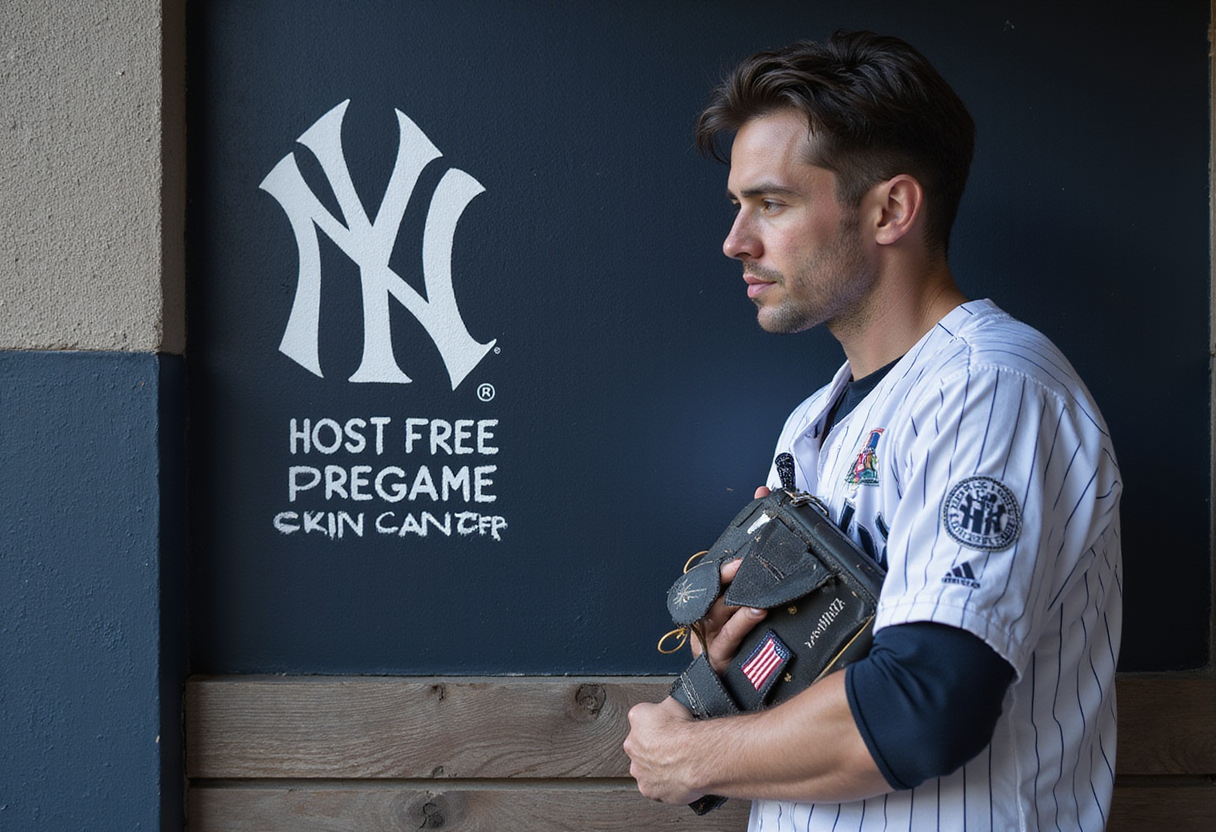
The New York Yankees will host free skin cancer screenings for guests before a game, converting the pregame window at the stadium into an opportunity for dermatologic examination at no cost to attendees.
The club announced the initiative through MLB.com, framing it as a service to fans arriving early. Guests who take part can receive a skin check before first pitch, placing a clinical screening inside what is otherwise a leisure setting — the ballpark concourse in the hours before a game begins.
The announcement itself is brief, and the source does not specify the date of the screening event, the number of dermatologists or clinicians who will staff it, or which professional organizations are partnering with the team. What it does establish is the model: admission to the screening carries no charge, and it is available to ticketed guests during the pregame period rather than at a separate clinic appointment.
For dermatology practices and public-health communicators, stadium-based screenings are a familiar format. Professional sports venues draw large, cross-demographic crowds on a predictable schedule, and melanoma and non-melanoma skin cancer remain among the most common malignancies in the United States, with early detection tied directly to outcomes — particularly for melanoma, where tumor thickness at diagnosis (Breslow depth) is a central prognostic factor. The Yankees' program does not publish staging or detection data, and no results from the screenings were included in the announcement.
The source does not state whether screenings will involve full-body examination or spot checks of visible, sun-exposed areas, a distinction that matters when evaluating the yield of community screening events. Nor does it indicate whether guests with suspicious findings will receive referrals for biopsy or follow-up dermatologic care, a step that community screening programs typically build into their protocols to convert a flagged lesion into a diagnostic pathway.
What the announcement does signal is continued institutional comfort with skin cancer screening as a fan-facing amenity. Free screening events lower the access barrier for people who may not schedule a dermatology visit on their own — a population that includes men, who are statistically less likely to seek routine skin checks and who make up a substantial share of the baseball audience. A ballpark event reaches them where they already are, on an afternoon they have already committed to spending outdoors — frequently in direct sun during afternoon games.
Sun exposure is the connective tissue between the venue and the disease being screened for. Baseball is an outdoor sport played largely in summer months, and fans in the stands accumulate ultraviolet exposure over three-plus hours of a typical game. That context gives a pregame screening at a baseball stadium a natural logic beyond simple convenience, even though the announcement does not frame the program in those terms or cite any UV-exposure rationale.
For clinicians, the takeaway is a reminder that screening access increasingly meets patients in non-clinical spaces, and that institutional partners — in this case a Major League Baseball franchise — can supply the venue and the foot traffic while medical partners supply the examination. Whether the Yankees expand the screenings into a recurring program, publish participation figures, or report detection outcomes will determine whether this becomes a measurable public-health intervention or a one-day event.
The screenings themselves remain the concrete offering: free, on-site, and timed to the pregame window for guests attending the game.
Source: Google News: Skin cancer
Amara Osei
Show full bio
Correspondent covering technology and product news in Clinical dermatology, inflammatory skin disease and biologics at Derm Field.