Calcium Thioglycolate Clears Plantar Hyperkeratosis in AD Case
Updated
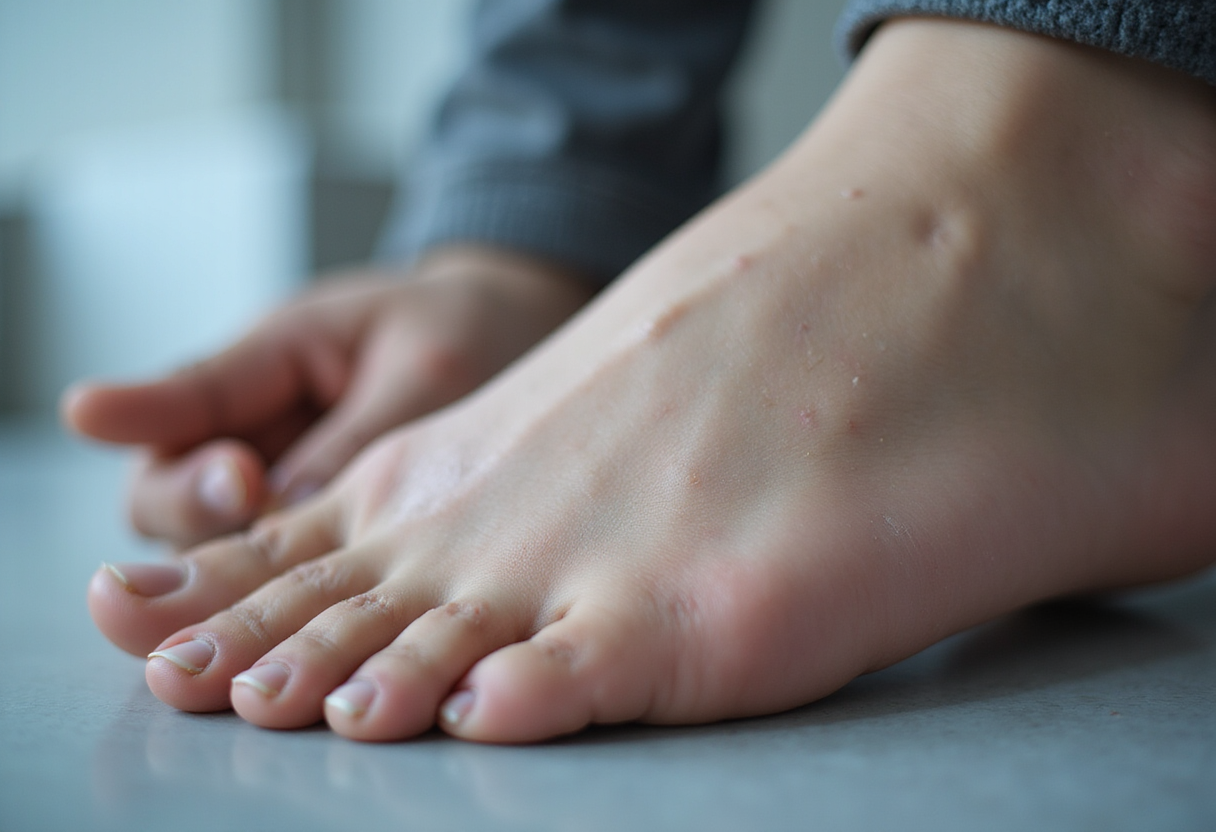
A single-patient case report in Cureus documented resolution of severe plantar hyperkeratosis in atopic dermatitis after topical calcium thioglycolate therapy. The case represents an off-label use of a depilatory-grade agent on inflamed, sensitive skin — and it sits at the edge of what case reports can prove.
The report, "Topical Calcium Thioglycolate for Severe Plantar Hyperkeratosis in Atopic Dermatitis: A Case Report," runs as a peer-reviewed open-access item in Cureus. Cureus publishes across medical specialties and has built a steady dermatology submission stream. The case carries the inherent limits of n=1 evidence: no control arm, no blinding, no formal scoring system such as a hyperkeratosis severity index or an EASI component for the feet.
What did the case actually show?
Plantar hyperkeratosis is the medical term for thickened, hardened skin on the weight-bearing sole. It cracks under pressure and limits walking. In atopic dermatitis the condition tends to worsen, because the barrier is already broken and prone to flare, and standard topicals often sting on contact. Hyperkeratosis of the sole can also mark palmoplantar keratoderma, psoriasis, or chronic eczema — but in atopic dermatitis it usually tracks the inflammation rather than running alone.
The clinician applied calcium thioglycolate directly to the affected sole. Calcium thioglycolate is the active salt in most chemical depilatories, sold over the counter for hair removal. It works by reducing keratin disulfide bonds, loosening compacted stratum corneum — the same chemistry that removes hair can in theory soften callus.
The indexed summary describes clinical improvement in the hyperkeratosis. It does not detail dose, frequency, or treatment duration in the metadata accessible to readers. Patch-test results and follow-up interval were also not reported.
Why does the combination raise eyebrows?
Atopic dermatitis is one of the most common chronic skin diseases, often beginning in childhood. Foot involvement is common but under-reported in clinical trials, which tend to focus on flexural and facial skin.
Atopic skin reacts to most keratolytics. Salicylic acid stings. Urea at 40% burns. Lactic acid irritates. The standard formulary narrows fast in a patient with active dermatitis on the feet.
Calcium thioglycolate sits outside that formulary. It is sold for cosmetic hair removal, not foot care. Its irritant and sensitization profile is documented in cosmetic dermatology literature. Putting it on atopic feet is a defensive move, not a routine prescription.
Two risks stand out: irritant contact dermatitis and chemical burn under occlusion. The case implicitly assumes the clinician screened for these before applying.
Where does this leave clinicians?
The takeaway is simple: this is one patient, not a protocol. A case report can suggest an idea. It cannot set a standard of care, and no regulator has approved thioglycolate for hyperkeratosis in atopic skin.
Dermatologists treating refractory plantar hyperkeratosis should still start with emollients, urea, and salicylic acid where tolerated. Topical corticosteroids address the underlying inflammation. Calcium thioglycolate belongs on the bench, not in the starter kit, until case series or comparative trials emerge.
What should readers watch next?
The chemistry is decades old, but the dermatology indications keep growing. Watch for any follow-up case series, ideally with photographic documentation, patch-test data, and standardized severity scores tracked over weeks or months.
The forward signal is clear. Off-label keratolytics in inflammatory skin disease will keep generating single-patient reports. Whether any clear a path to formal trials remains the open question — and that is the only verdict a single Cureus case can deliver.
Source: Google News: Atopic dermatitis
Daniel Okafor
Show full bio
Staff writer covering people, launches and day-to-day practice in Clinical dermatology, inflammatory skin disease and biologics at Derm Field.