Immunotherapy Shows Promise for Clearing Residual Melanoma Cells
Updated
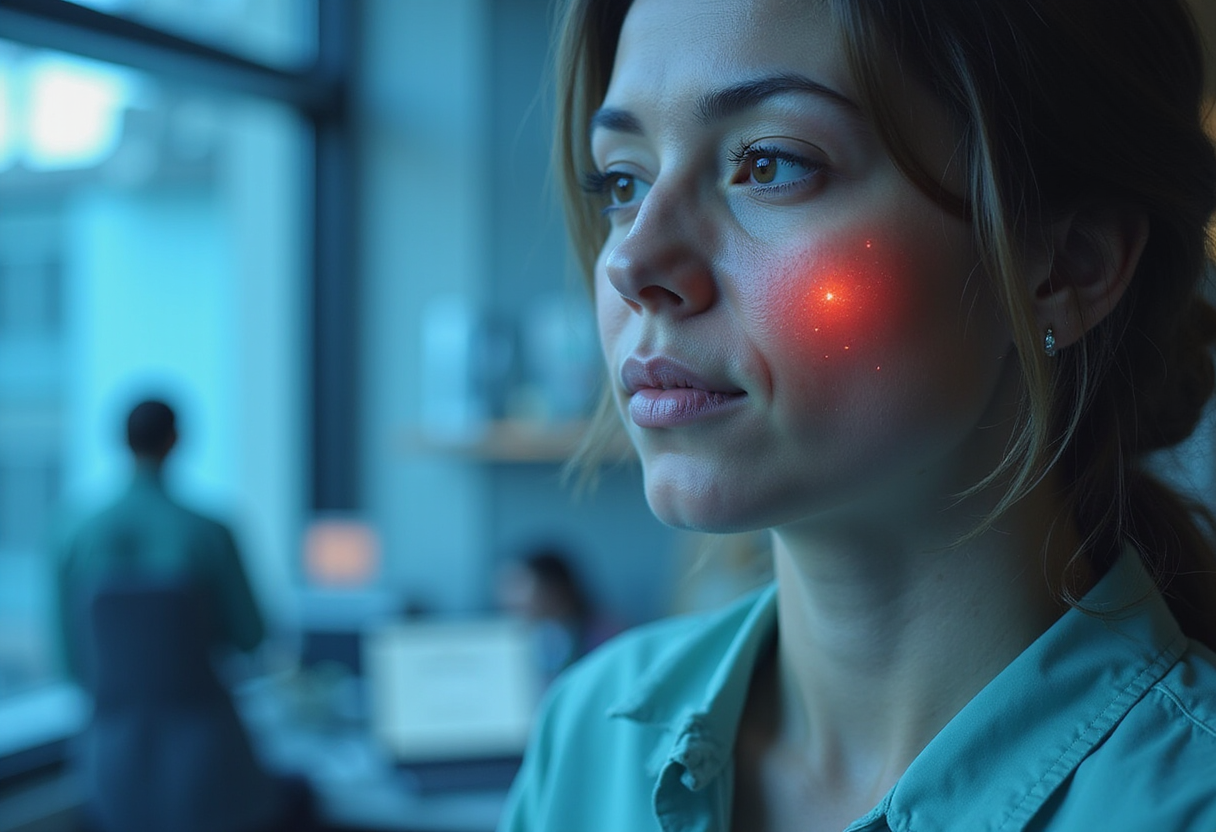
Immunotherapy may help clear residual melanoma cells that persist after surgery, according to new findings reported by the Cornell Chronicle.
The report centers on the central clinical problem in melanoma management after resection: microscopic disease left behind. Even with complete surgical excision and negative margins, patients with melanoma can harbor residual malignant cells that drive recurrence. The Cornell team's work suggests that immune-based therapy could target exactly this population of surviving cells, rather than waiting for measurable relapse.
This line of inquiry matters for a large cohort. Melanoma remains the most lethal form of skin cancer, and recurrence after apparent curative excision is a persistent failure mode of current management. Adjuvant therapy has already reshaped post-surgical care in recent years — checkpoint inhibitors targeting PD-1 and combination approaches have become standard options for patients with stage IIB and higher disease who carry meaningful recurrence risk. The new Cornell work extends that logic one step earlier in the disease course: to the cellular residue that imaging and pathology cannot detect.
The Chronicle's report frames the findings as promising but early. Precise effect sizes, cohort characteristics, and study design details were not included in the initial release, and clinicians should treat the results as hypothesis-generating until peer-reviewed data with defined endpoints — recurrence-free survival, overall survival, or molecular evidence of minimal residual disease clearance — are published. Dermatologists and oncologists reading the coverage should keep that distinction firmly in view: manufacturer and institutional enthusiasm is not the same thing as trial evidence.
The underlying concept is nonetheless mechanistically coherent. Residual melanoma cells exist in a vulnerable window. They are few in number, potentially less heterogeneous than established tumors, and the patient's immune system may still hold functional antigen recognition against them. Immunotherapy applied at this stage could, in principle, eliminate disease before it becomes clinically apparent — converting adjuvant treatment from risk-based treatment into a targeted strike on detectable molecular residue.
That framing also aligns with broader movement in the field toward minimal residual disease detection. Circulating tumor DNA assays are increasingly used to identify patients whose blood shows molecular evidence of persistent melanoma after surgery. A therapy demonstrated to clear those molecular signals would give clinicians a measurable endpoint and a rational basis for treatment intensity — sparing low-risk patients from unnecessary toxicity while escalating care for those with true residual disease.
For the dermatology community, the implications are twofold. First, surgeons and dermatologists who perform excisions and coordinate follow-up care may eventually need to factor molecular residual-disease testing into surveillance protocols. Second, the findings reinforce the importance of prompt referral pathways for patients whose histology indicates elevated recurrence risk, since the window for effective immune clearance may depend on timing.
Caution remains warranted. The Chronicle report describes promise, not proof. Whether immunotherapy reliably eradicates residual melanoma cells in humans — and at what toxicity cost — requires controlled data. The Cornell team's next steps, presumably including publication of full methods and outcomes, will determine whether this approach advances toward trials or remains an institutional research program.
Clinicians and researchers will be watching for peer-reviewed results, defined cohorts, and survival endpoints as this work moves from early institutional reporting toward evidence that can inform adjuvant melanoma protocols.
Source: Google News: Melanoma
Olivia Hart
Show full bio
News editor covering technology and product news in Clinical dermatology, inflammatory skin disease and biologics at Derm Field.