JAAD Study Defines New Phenotype: Altered Hair Texture After Alopecia Areata Regrowth
Updated
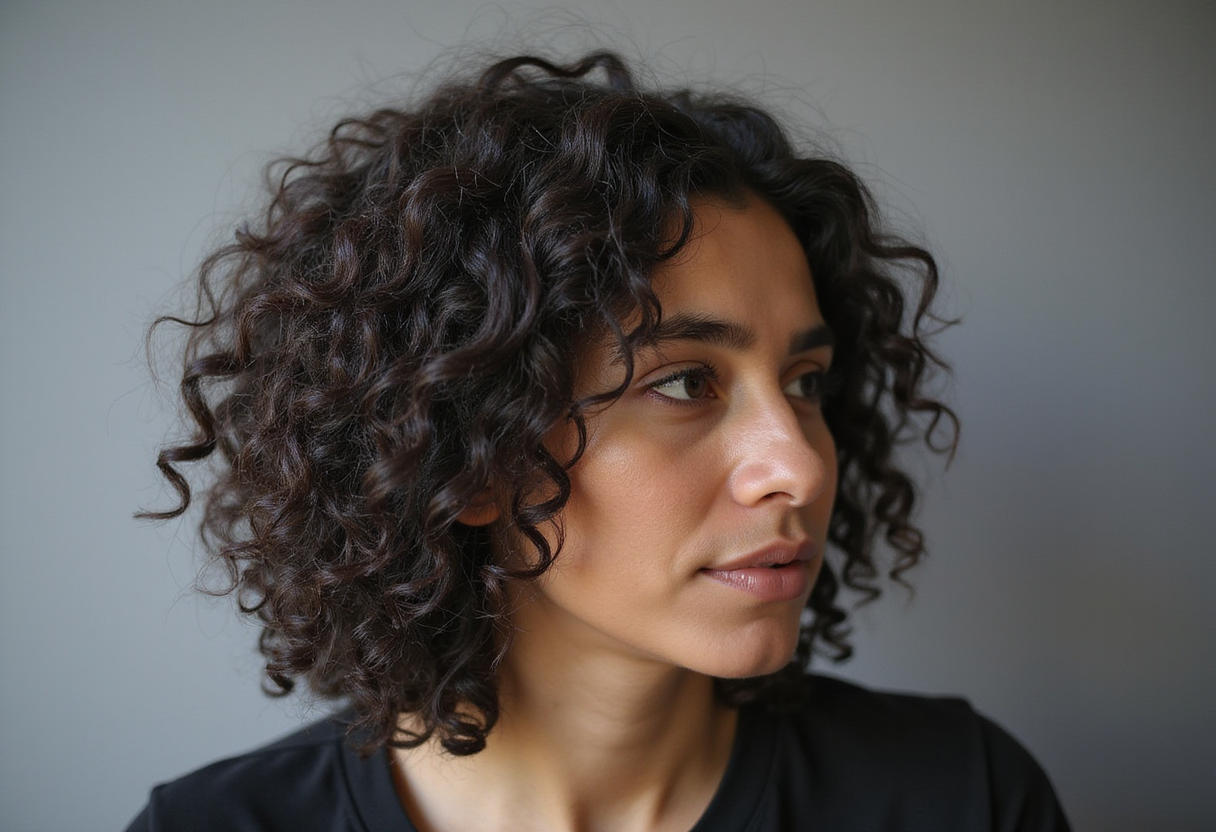
A study published online October 8, 2026 in the Journal of the American Academy of Dermatology identifies acquired hair texture alteration after regrowth in alopecia areata as a distinct clinical and ultrastructural phenotype rather than an incidental cosmetic complaint.
The paper, authored by Sai Yang, Wei Shi, Fangfang Wu, Rong Tang, Tingting Wang, Shuxia Yang, Jie Xie, Xingqi Zhang, Fang Wang and Ying Luo, frames the phenomenon as its own diagnostic entity. Patients whose alopecia areata resolves often regrow hair that differs in texture from the pre-disease state — a change clinicians have documented anecdotally but, until now, have not characterized systematically at both the clinical and ultrastructural levels.
By defining the alteration as a phenotype — a recognizable, reproducible clinical pattern with a corresponding structural signature — the authors give dermatologists a framework for counseling patients and for differentiating post-regrowth texture change from other causes of acquired hair shaft abnormality.
Why does the distinction matter?
Alopecia areata is a T-cell-mediated, non-scarring hair loss disorder. Regrowth is common, but the hair that returns is not always identical to the hair the patient lost. When texture changes — straight hair returning wiry, or coarse hair returning fine — patients frequently ask whether the change signals relapse, scarring or permanent damage.
Classifying the alteration as a distinct phenotype implies three practical consequences:
- The texture change is a recognizable post-regrowth event, not a random finding.
- It has a describable ultrastructural correlate, visible at the level of the hair shaft's internal architecture.
- It warrants its own place in the differential diagnosis of acquired hair shaft changes, separate from genetic hair disorders and from weathering or cosmetic damage.
How did the investigators approach it?
The study design pairs clinical assessment of affected patients with ultrastructural examination of the regrown hair shafts. That dual approach is what elevates the finding from observation to phenotype: the authors report both what the altered hair looks like at the bedside and what it shows under the microscope at the level of hair shaft microstructure.
The published abstract does not state cohort size or the specific imaging modality used. Derm Field will update this report as the full text becomes available through JAAD.
What changes for the clinic?
For dermatologists managing alopecia areata, the study offers a named entity to attach to a familiar complaint. When a patient reports that regrown hair feels or behaves differently, clinicians can now point to a characterized phenotype with an ultrastructural basis — information that supports more precise prognostic counseling.
The characterization may also sharpen future research. A defined phenotype invites longitudinal tracking: whether texture normalizes over time, whether it correlates with treatment modality, and whether specific ultrastructural features predict recovery remain open questions the authors' framework can now support.
The full dataset, including clinical photographs and ultrastructural images, appears in the article available online from October 8, 2026, and dermatologists who treat alopecia areata will want to review whether the phenotype matches what they see in their own regrowth cohorts.
Source: Journal of the American Academy of Dermatology (Elsevier)
Olivia Hart
Show full bio
News editor covering technology and product news in Clinical dermatology, inflammatory skin disease and biologics at Derm Field.