Military Aviators Face Elevated Skin Cancer Risk, Study Finds
Updated
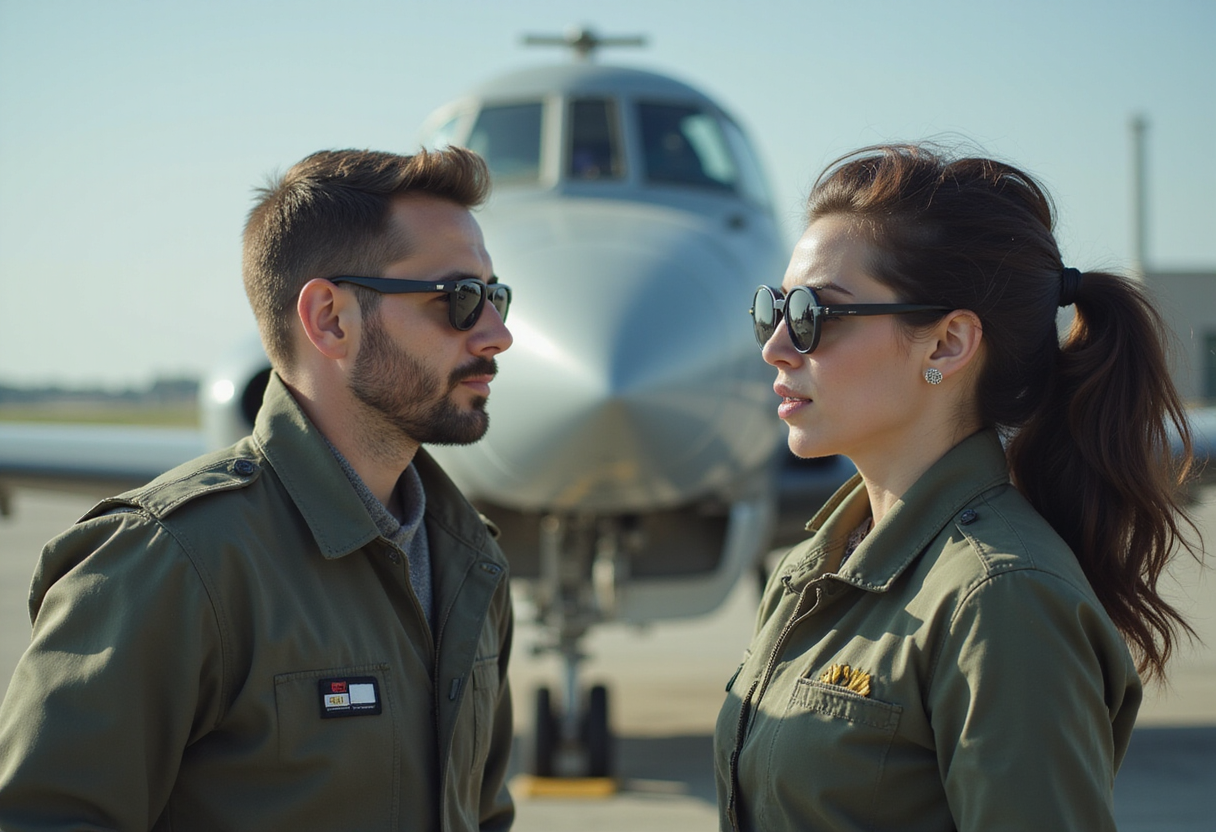
A new study concludes that military aviators develop skin cancer at higher rates than the general population, adding occupational flight to the growing list of professions with documented ultraviolet-related cancer risk.
The finding lands as dermatology groups press for better surveillance of high-risk occupational cohorts. Military pilots sit in perspex canopies at altitude for thousands of hours across a career, and the cockpit environment combines direct solar exposure with ionizing radiation doses that increase with flight altitude. Glass transmits UVA almost completely, and UVA penetrates deep into the dermis, driving the mutational pathways behind basal cell carcinoma, squamous cell carcinoma and melanoma.
The study's headline answer to its own framing question — do military aviators get more skin cancer? — is yes. That result matters for dermatology practice on two fronts: it identifies a cohort that warrants structured skin-cancer screening, and it strengthens the case that occupational history belongs in every patient intake for cutaneous malignancy.
High-altitude flight is not a new concern in radiation medicine. Cosmic radiation roughly doubles with each increase in altitude of about 1,500 meters, and aircrew are classified in several jurisdictions as occupationally exposed workers. Military flying compounds the baseline exposure: aircrews frequently operate at higher altitudes than commercial routes, often without the window shading available to airline pilots, and ejection-seat and canopy designs prioritize visibility over filtration.
For dermatologists, the practical implication is screening intensity. Aviators with long flight histories present a cumulative-exposure profile more akin to outdoor workers than to typical office patients. Full-body skin examinations at shorter intervals, meticulous documentation of flight hours and deployment history, and a low threshold for dermoscopy and biopsy of suspect lesions all follow from the elevated baseline risk this study describes.
The finding also carries weight for veterans' care. Skin cancer in former military aircrew may surface decades after service, and linking the diagnosis to occupational exposure can affect how cases are tracked within health systems that serve veterans. Dermatologists treating this population should ask about aviation service explicitly, because patients rarely volunteer it as relevant dermatologic history.
Prevention messaging changes shape for this cohort, too. Broad-spectrum sunscreens with high UVA protection, UV-filtering eyewear, and protective coverage during flight all have a role, but cockpit engineering — canopy coatings and radiation shielding — ultimately determines how much exposure aircrews actually absorb. A screening and prevention protocol built for the beach will not fully address a radiation environment that persists at altitude regardless of cloud cover.
The study signals a broader question for the field: how many other occupational groups carry similar, under-recognized cutaneous risk. Whether follow-up work quantifies dose-response relationships between flight hours and cancer incidence, or extends the analysis to cabin crews and commercial pilots, the aviation cohort now gives dermatology a concrete model for translating occupational exposure data into screening policy.
Source: Google News: Skin cancer
Amara Osei
Show full bio
Correspondent covering technology and product news in Clinical dermatology, inflammatory skin disease and biologics at Derm Field.