Melanoma Vaccine Candidate Shows Promise: What Dermatologists Know
Updated
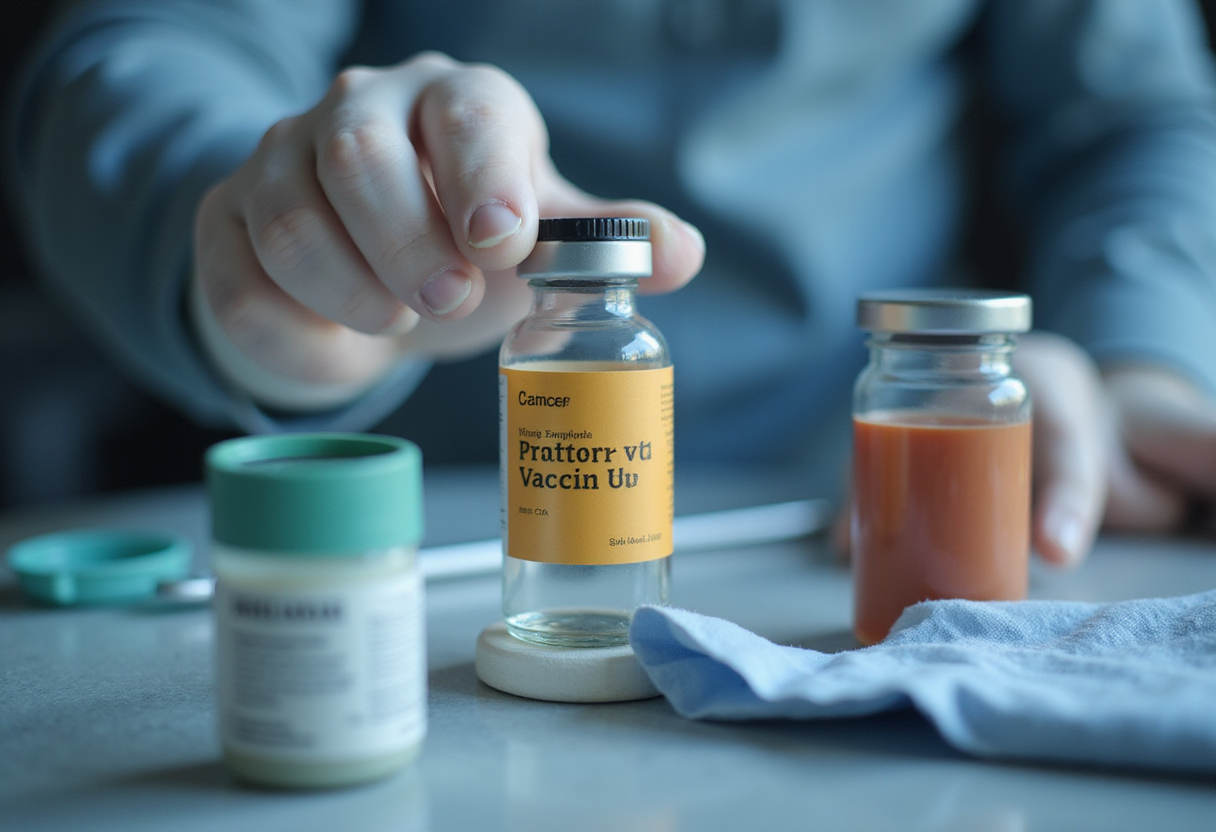
A personalized cancer vaccine for melanoma is drawing attention after reporting meaningful reductions in recurrence risk for resected high-risk disease — a development dermatologists and oncologists alike are watching closely as late-phase trial data accumulate.
The candidate at the center of the coverage is an individualized neoantigen therapy: a messenger RNA vaccine constructed from sequencing of a patient's own tumor, designed to train the immune system against mutations unique to that melanoma. It is administered in combination with the anti-PD-1 checkpoint inhibitor pembrolizumab, the current standard of care for resected stage IIB–IV melanoma at high risk of recurrence.
The evidence that has fueled the current optimism comes from the phase 2b KEYNOTE-942 trial, which randomized 157 patients with completely resected stage IIB–IV melanoma to receive either the individualized vaccine plus pembrolizumab or pembrolizumab alone. The design is notable because it was among the first randomized readouts for a personalized mRNA cancer vaccine in any solid tumor.
The headline result: combination therapy cut the risk of recurrence or death by 44% compared with pembrolizumab monotherapy. At roughly three years of follow-up, recurrence-free survival was 78.6% in the combination arm versus 62.2% in the pembrolizumab-alone arm. Distant metastasis-free survival also favored the combination. On the strength of those data, the US Food and Drug Administration granted the candidate a breakthrough therapy designation in early 2023 for adjuvant treatment of resected high-risk melanoma.
For the dermatology community, the significance is layered. Melanoma outcomes have improved dramatically over the past decade thanks to checkpoint inhibitors and BRAF/MEK-targeted therapy, but a substantial fraction of resected stage IIB–IV patients still relapse despite adjuvant pembrolizumab. Anything that deepens the recurrence-free survival advantage in the adjuvant setting changes the conversation specialists have with patients after surgical excision — and, by extension, the intensity of surveillance dermatologists coordinate during follow-up.
Clinicians quoted in the consumer coverage caution against overinterpreting the phase 2b numbers. The trial was modest in size, was not blinded, and its primary endpoint was recurrence-free survival rather than overall survival. Overall survival data remain immature. Enthusiasm, several physicians noted, should be calibrated to the strength of the evidence: promising, but not yet practice-defining.
Tolerability data from the trial showed a manageable profile. The most common vaccine-related adverse events were injection-site reactions and flu-like symptoms — fatigue, chills, fever and myalgia — consistent with other mRNA platforms. Grade 3 or higher treatment-related adverse events occurred more frequently in the combination arm, a point investigators have flagged as an aspect requiring fuller characterization in larger trials. Immune-mediated adverse events typical of checkpoint inhibition were seen in both arms and did not appear meaningfully amplified by the vaccine in the reported data.
A phase 3 trial is now underway, randomizing a substantially larger population of resected high-risk melanoma patients to the vaccine-plus-pembrolizumab regimen versus pembrolizumab alone, with recurrence-free survival as the primary endpoint. That study will determine whether the phase 2b signal holds at scale and whether the personalized approach earns a place in adjuvant guidelines.
The manufacturing model is as consequential as the immunology. Each dose is built from tumor and blood sequencing of the individual patient, with production turnaround measured in weeks — a logistical paradigm far closer to personalized medicine than to traditional vaccine distribution. Whether that model can scale to routine oncology practice, and at what cost, remains an open question that payers and health systems will have to confront if phase 3 confirms benefit.
For Derm Field readers, the practical takeaway is anticipation rather than action. No melanoma vaccine is approved today; adjuvant therapy for resected high-risk disease remains checkpoint inhibition per current guidelines, and surgical management with appropriate margin control and sentinel lymph node staging continues to anchor melanoma care. What the candidate represents is a credible path toward treatment tailored to each patient's tumor mutational profile, moving the field from histology-driven to genomics-driven adjuvant decision-making.
Investigators have also signaled interest in extending the individualized neoantigen platform beyond melanoma, with trials in other tumor types following the same vaccine-plus-checkpoint-inhibitor logic — a sign that the melanoma experience may prove to be the first chapter of a broader story rather than an isolated result.
If the phase 3 readout reproduces the 44% risk reduction seen at phase 2b, dermatologists can expect the adjuvant melanoma landscape to shift within a few years.
Source: Google News: Melanoma
Sophie Lindqvist
Show full bio
Market editor covering people, launches and day-to-day practice in Clinical dermatology, inflammatory skin disease and biologics at Derm Field.