JAAD Article Frames New Palmoplantar Toxicity Distinct From HFS
Updated
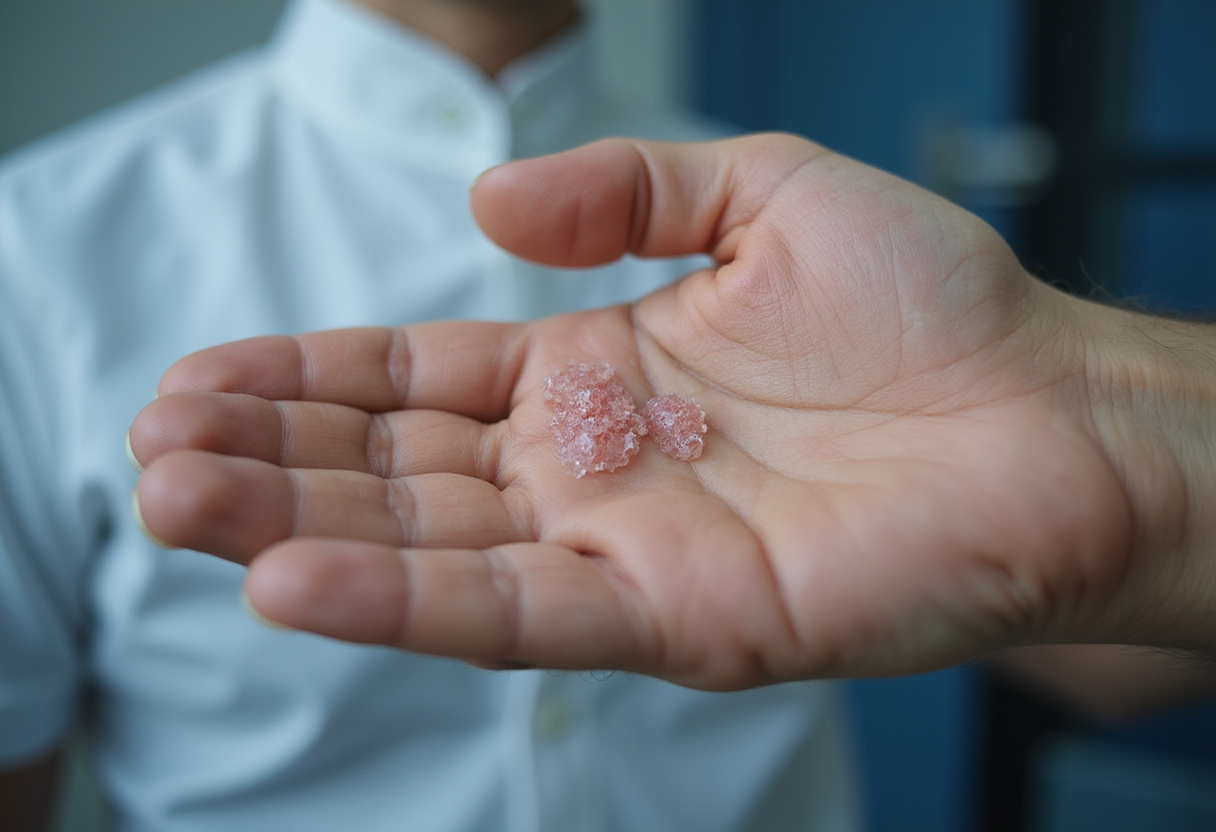
A study published online October 8, 2026, in the Journal of the American Academy of Dermatology proposes that desquamative palmoplantar dermatitis associated with bispecific antibodies constitutes a distinct toxicity profile — separate from both classic hand-foot syndrome (HFS) and hand-foot skin reaction (HFSR).
Authors Vasiliki Nikolaou and Vincent Sibaud, the latter a dermatologist with long-standing expertise in oncologic cutaneous toxicities, argue that clinicians need to recognize this presentation as its own entity rather than forcing it into the existing HFS/HFSR framework developed for cytotoxic agents and targeted therapies.
The timing matters. Bispecific antibodies — engineered molecules that simultaneously bind two antigens, most commonly engaging T cells against tumor cells — now occupy a central place in the treatment of hematologic malignancies, and their use in solid tumors continues to expand. As exposure grows, so does the catalog of cutaneous adverse events that dermatologists in oncology-adjacent practice will be asked to manage.
Why does the HFS/HFSR distinction fail here?
HFS, historically tied to cytotoxic chemotherapy such as capecitabine and liposomal doxorubicin, presents with symmetric erythema and dysesthesia on the palms and soles. HFSR, associated with multikinase inhibitors like sorafenib and sunitinib, tends to produce localized, hyperkeratotic lesions with a yellowish plaque character, often at pressure points.
Nikolaou and Sibaud position bispecific antibody-associated desquamative palmoplantar dermatitis outside this binary. The descriptor "desquamative" itself signals the distinguishing clinical feature: a shedding, scaling process on the palms and soles that does not map cleanly onto either the diffuse inflammatory erythema of HFS or the focal keratotic pattern of HFSR.
For treating clinicians, the distinction carries practical weight. Grading, dose-modification decisions, and symptomatic management protocols built for HFS and HFSR may not transfer directly to this newer toxicity. Misclassification risks both overtreatment with interventions designed for a different pathology and undertreatment of a process that may follow its own course.
What should dermatologists watch for?
The publication directs attention to:
- Palmoplantar desquamation arising in patients receiving bispecific antibody therapy
- Morphology that diverges from established HFS and HFSR patterns
- The need for accurate documentation as these agents reach broader indications
Oncodermatology has repeatedly shown that drug classes produce recognizable cutaneous signatures — EGFR inhibitors with papulopustular eruptions, BRAF inhibitors with keratotic proliferations, immune checkpoint inhibitors with a full lichenoid and bullous spectrum. The Nikolaou-Sibaud paper extends that principle to bispecifics, giving the dermatology community a named entity to track as prescribing volumes rise.
As bispecific antibodies move through expanded indications and earlier treatment lines, prospectively characterized descriptions like this one will shape how dermatologists grade, report, and manage the palmoplantar toxicities that accompany them.
Source: Journal of the American Academy of Dermatology (Elsevier)
Tom Whitfield
Show full bio
Senior reporter covering companies, deals and strategy in Clinical dermatology, inflammatory skin disease and biologics at Derm Field.